
Dr Filip Křížek is the head of the Department of Heavy Ion Physics of the NPI
16. 10. 2024
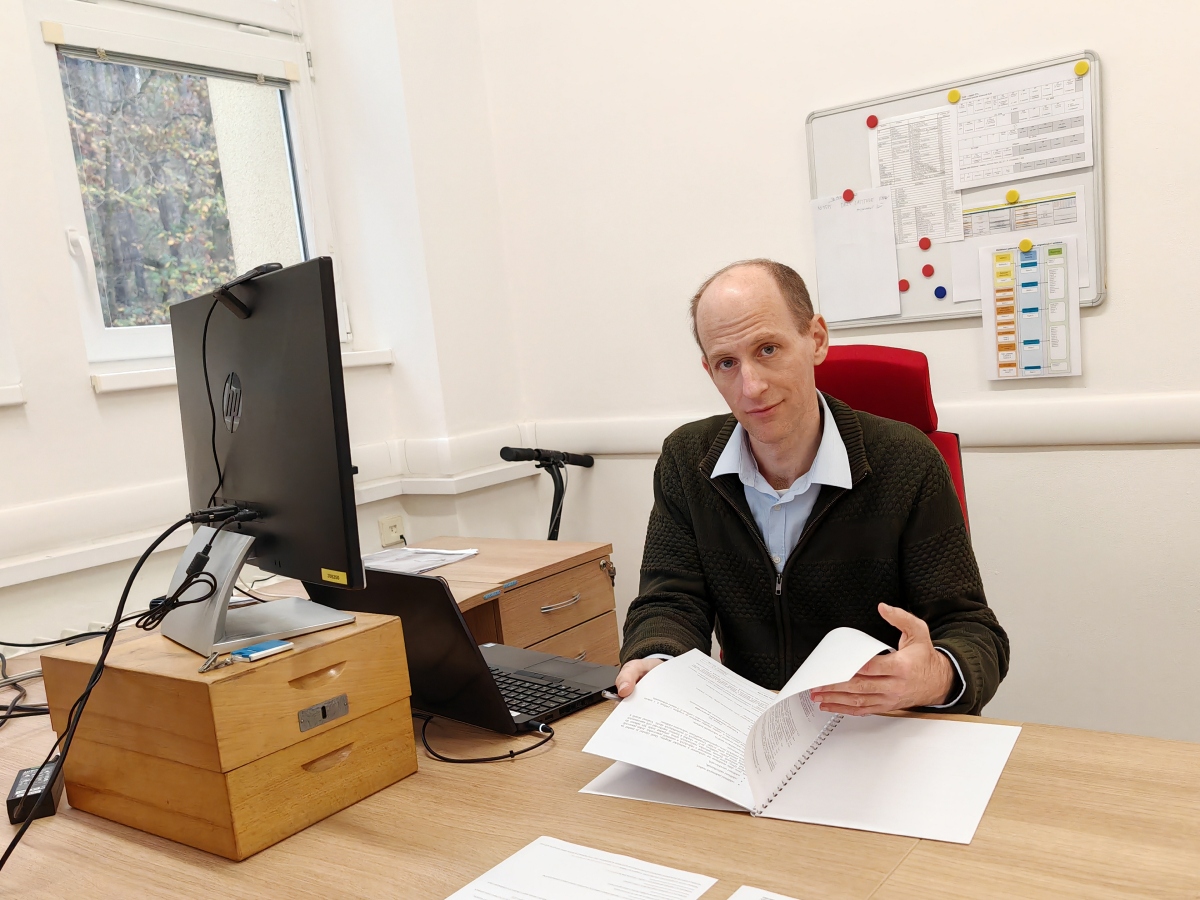
The Department of Heavy Ion Physics of the NPI (DHIP) has a new head. Dr Filip Křížek has been appointed to this position from 1 October 2024. The selection of the new head was carried out through an internal call in which Dr. Křížek was the only candidate.
Dr. Křížek, who is interested in the study of hard collision processes where jets are formed, has led the Ultrarelativistic Heavy Ion Collisions Group at the NPI since 2017. Dr. Křížek coordinates the Institute's collaboration with the ALICE experiment at CERN. A significant part of his scientific career is linked to this experiment. He started working on the experiment as a postdoctoral fellow at the NPI. At present, he is a member of the experiment's editorial board and is also responsible for the offline trigger for charged particle jets.
Dr. Křížek, who is also responsible for the organization of the NPI seminars, is an author or co-author of a number of publications and supervises doctoral, diploma, and bachelor theses. Dr Křížek has worked at the NPI for almost 20 years since 2003, with a three-year break. Dr. Křížek took over the position from Associate Professor Jana Bielčíková, whom the NPI management would like to thank for her long, tireless, and dedicated service.
Read also
- An international experimental campaign focused on superheavy element research took place at the NPI
- Cadets of the Zero-G mission visited the NPI Department of Radiation Dosimetry
- Ondřej Srba appointed new Head of the Department of Radiation Dosimetry at the NPI
- Jane Hvolbaek Nielsen appointed new Director General of ESS
- Jane Hvolbaek Nielsen appointed new Director General of the European Spallation Source (ESS)
- KATRIN experiment approaches the final phase of neutrino mass measurements
- Martin Kákona commented on the Artemis II mission
- Jan Vaněk played a key role in a study published in NATURE
- Testing of a new large-area diode at the HIMAC accelerator
- Special seminars at the NPI mark the 80th birthday of Prof Jan Kučera, Prof Pavel Exner and Dr Miloslav Znojil
