
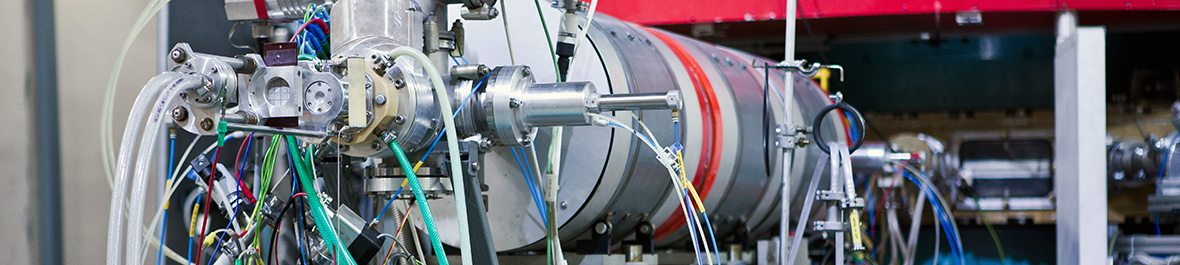
Cadets of the Zero-G mission visited the NPI Department of Radiation Dosimetry
06. 05. 2026
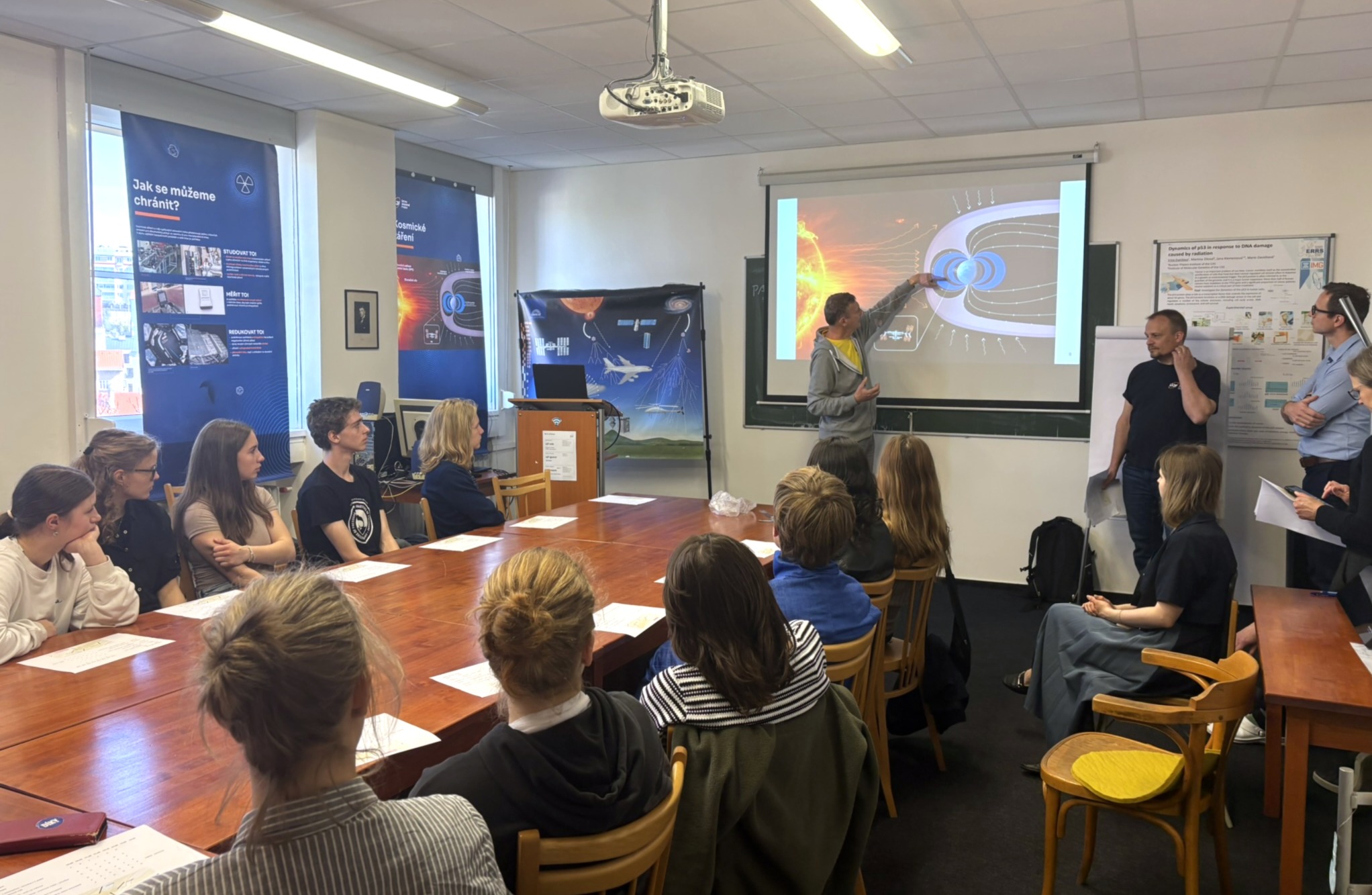
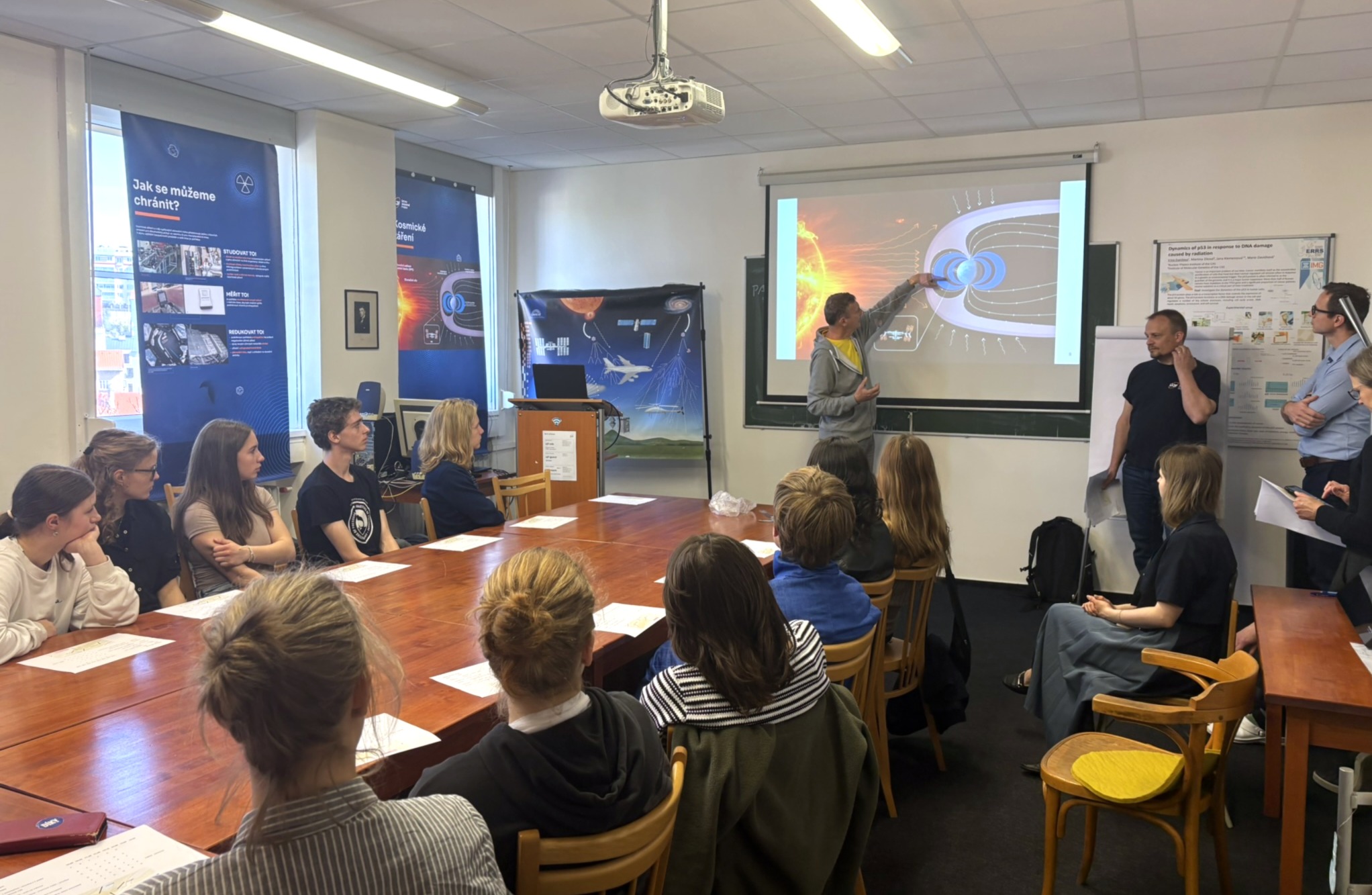
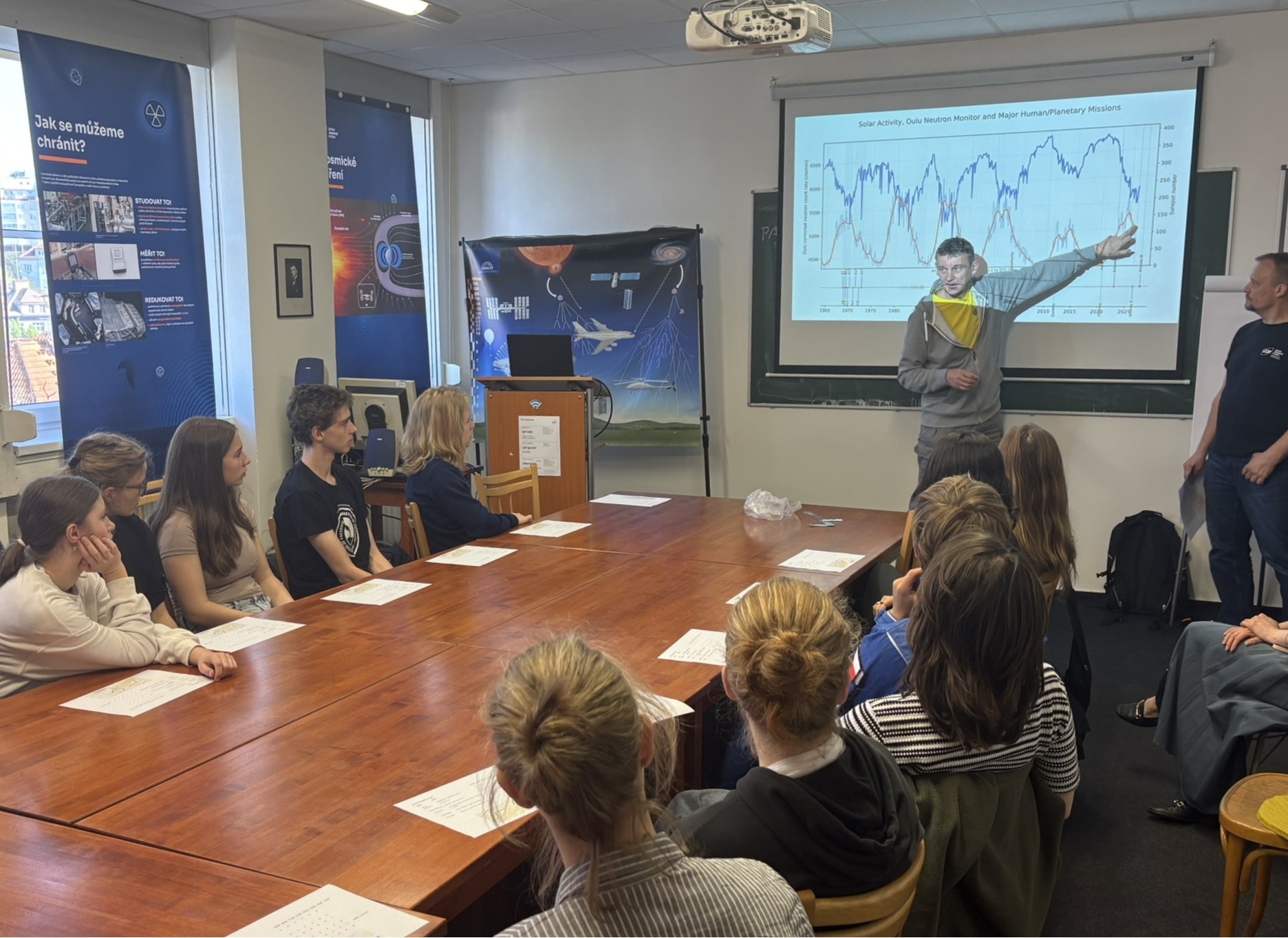
On Friday, 24 April 2026, the Department of Radioation Dosimetry of the Nuclear Physics Institute of the Czech Academy of Sciences welcomed cadets of the Zero-G programme together with selected secondary school students to its Bulovka workplace. During the full-day programme, the young ambassadors of the Czech Journey to Space initiative became acquainted with the NPI research focused on cosmic radiation, microgravity, and experiments being prepared for the International Space Station (ISS).
The programme began with lectures on cosmic radiation, microgravity, and their effects on living organisms. The lectures also included presentations of two NPI projects selected for implementation on the ISS – CZPAD and ZOE – introduced by Dr Martin Kákona and Dr Oldřich Zahradníček. The students learned about the scientific objectives of both experiments and how they contribute to research on the effects of the space environment.
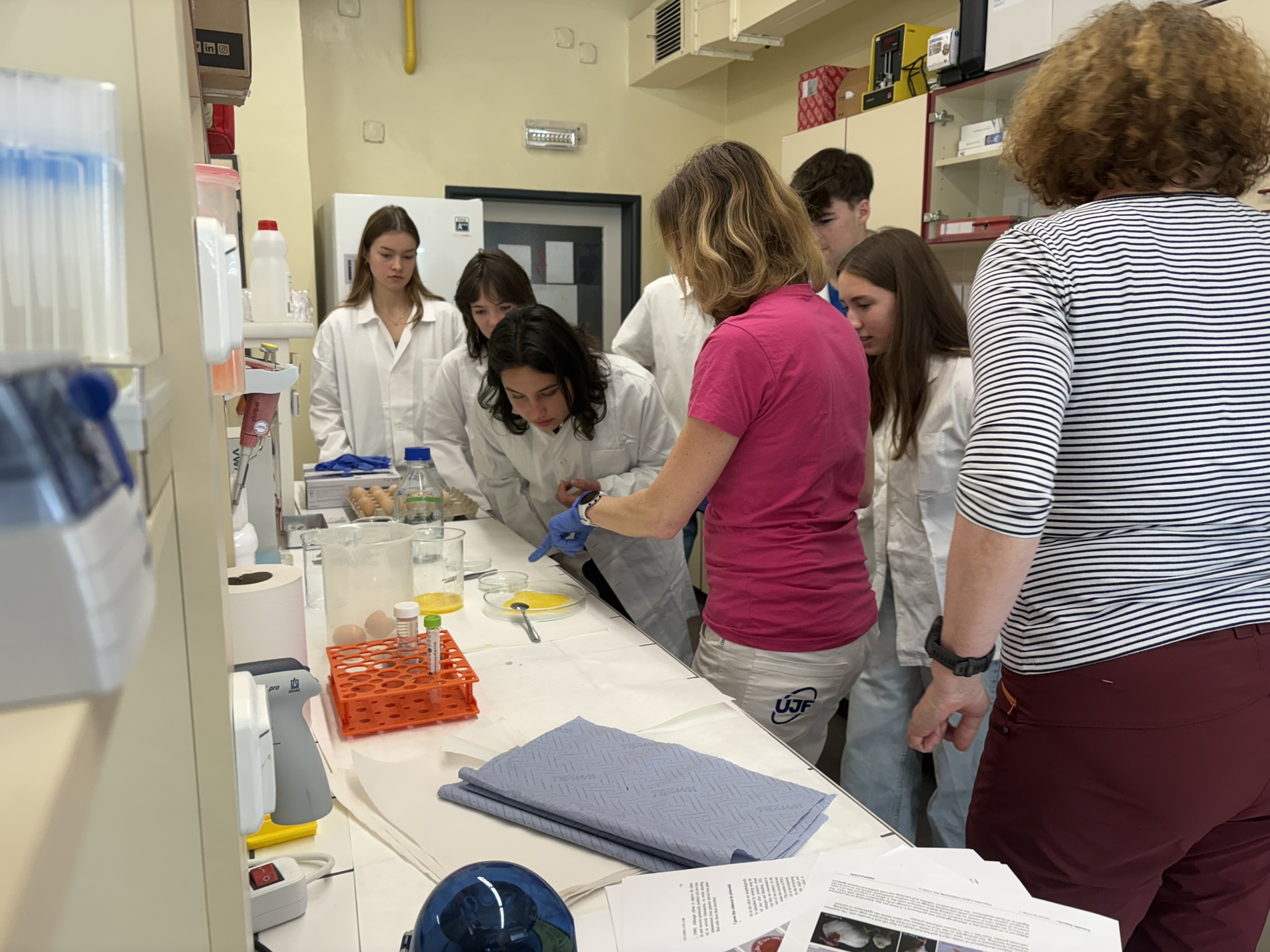
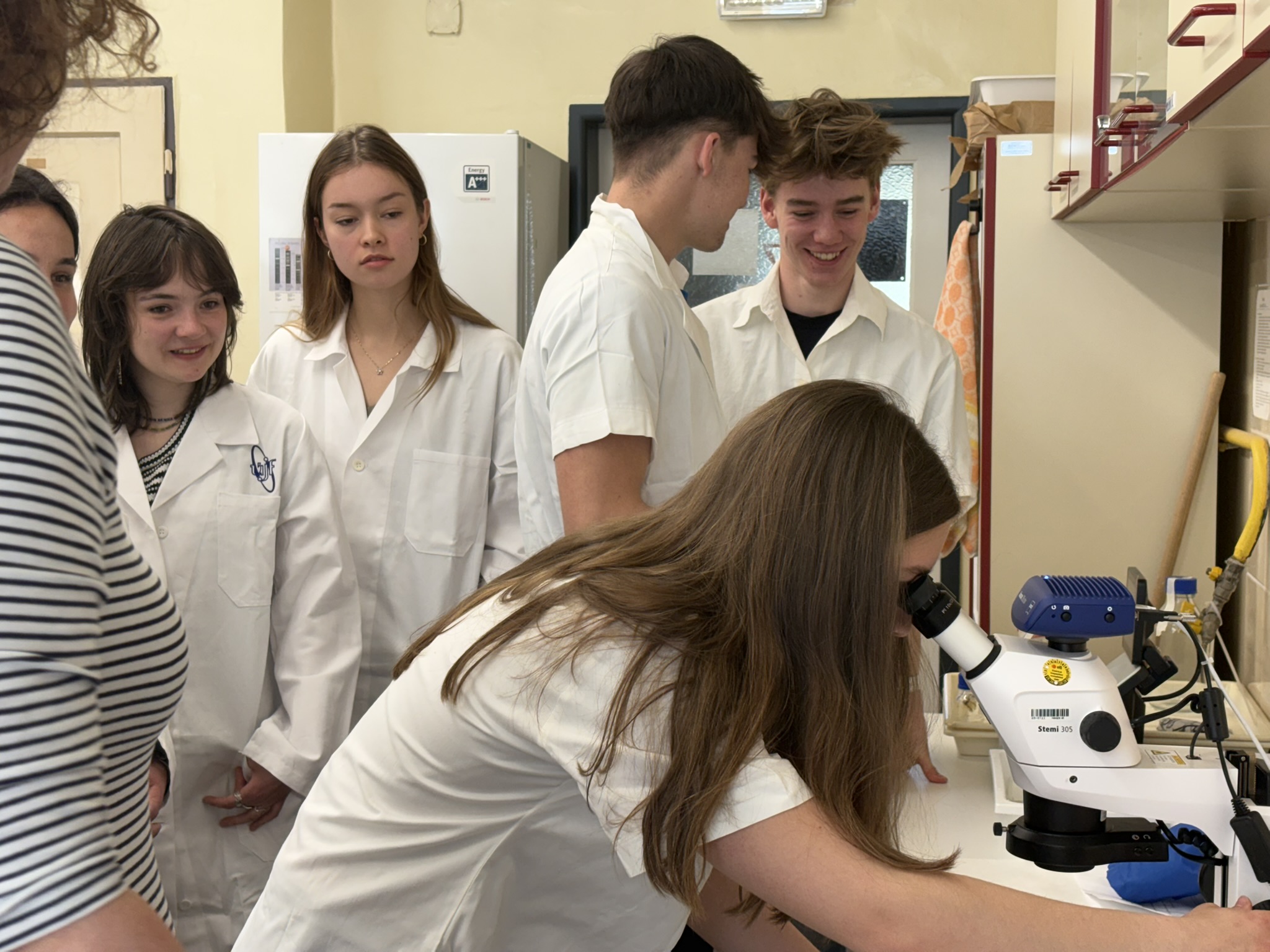
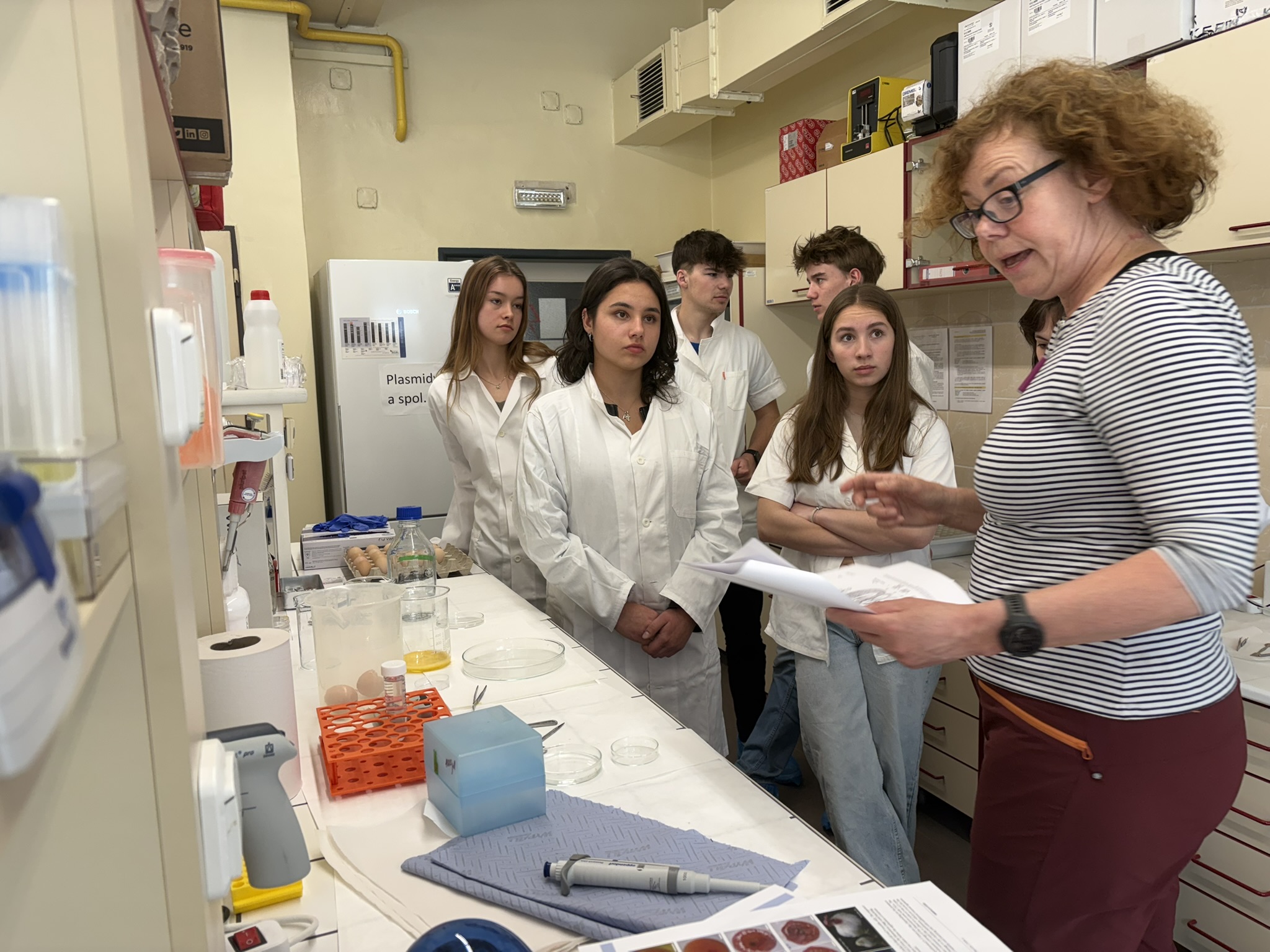
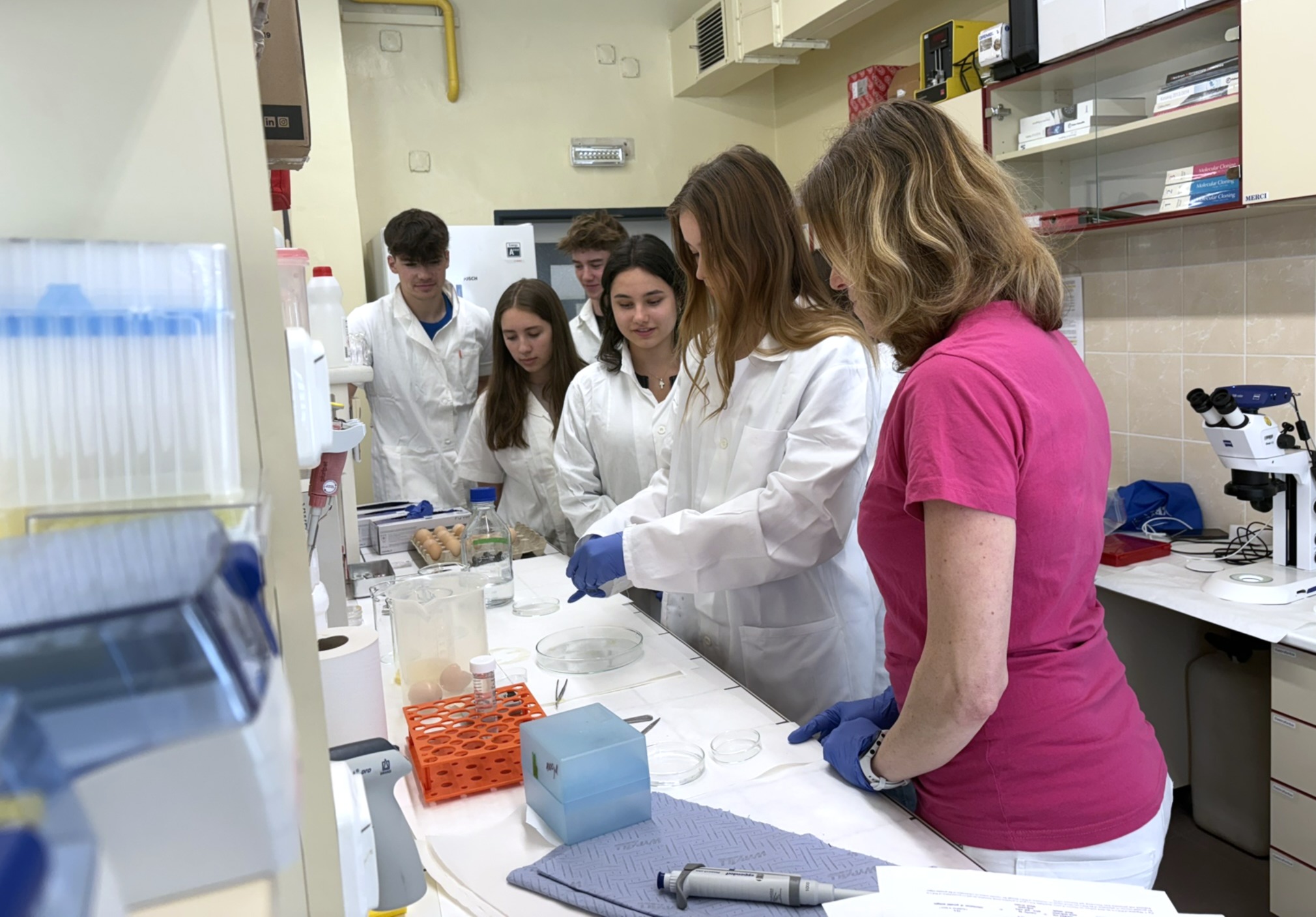
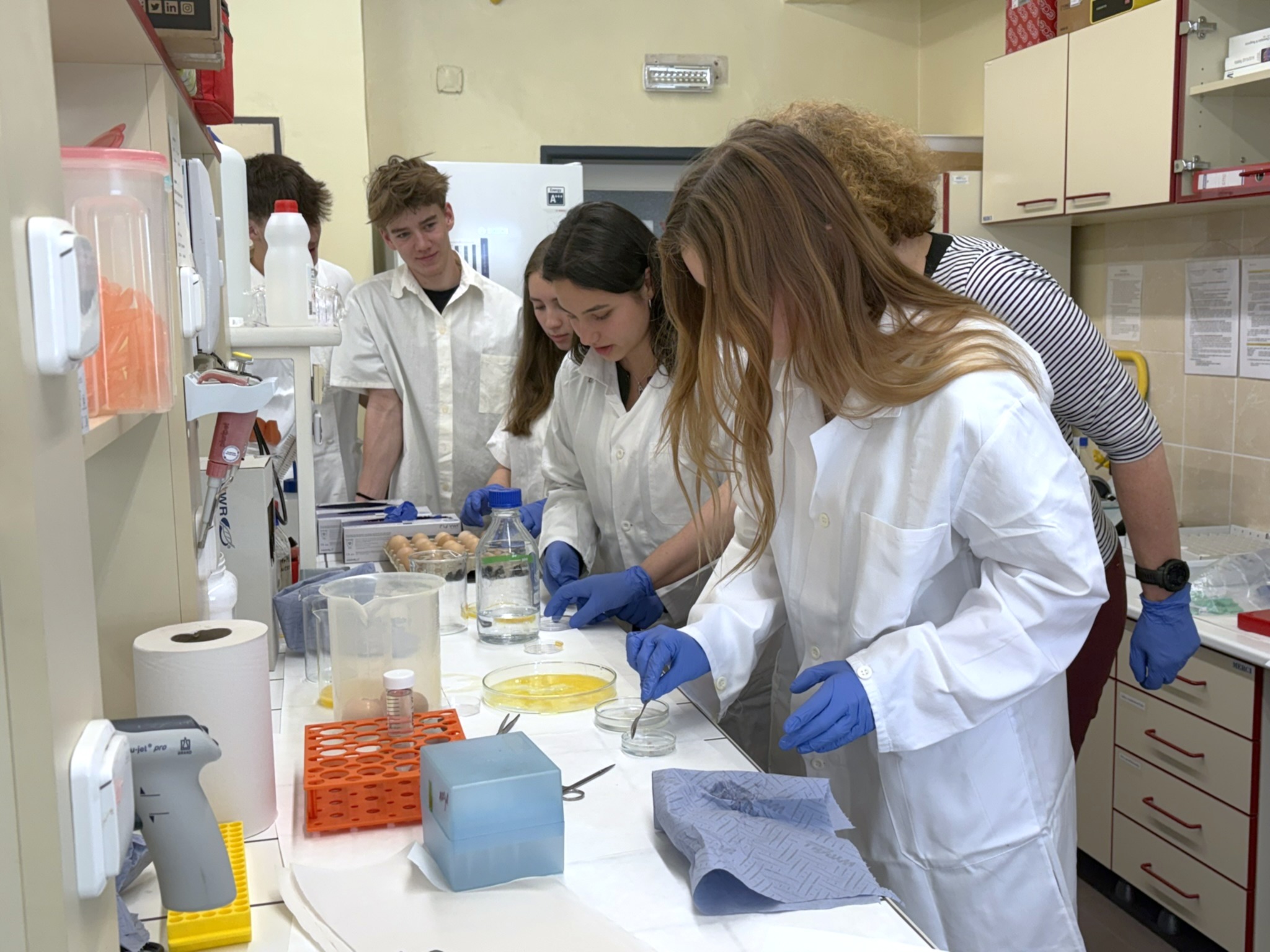
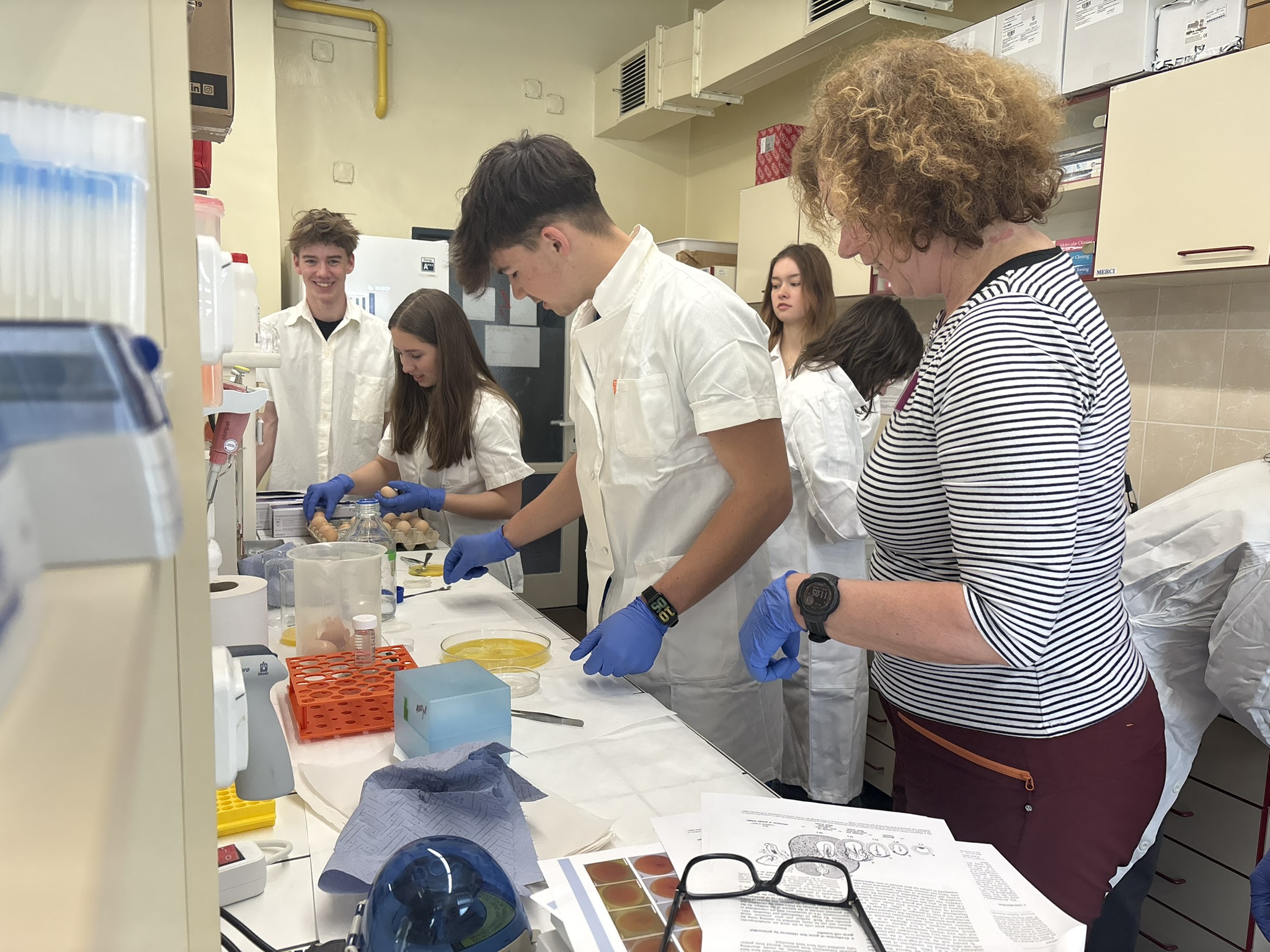
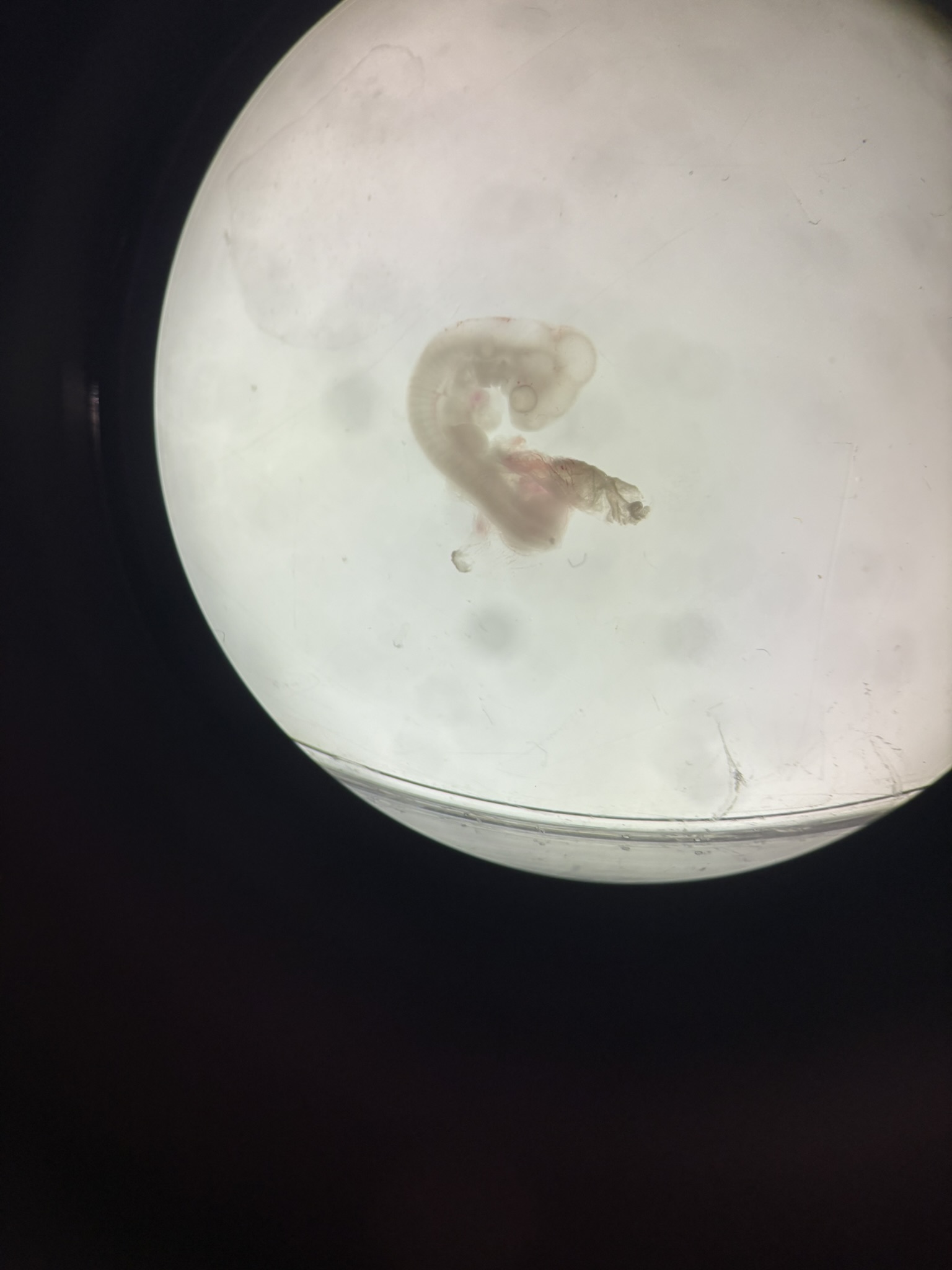
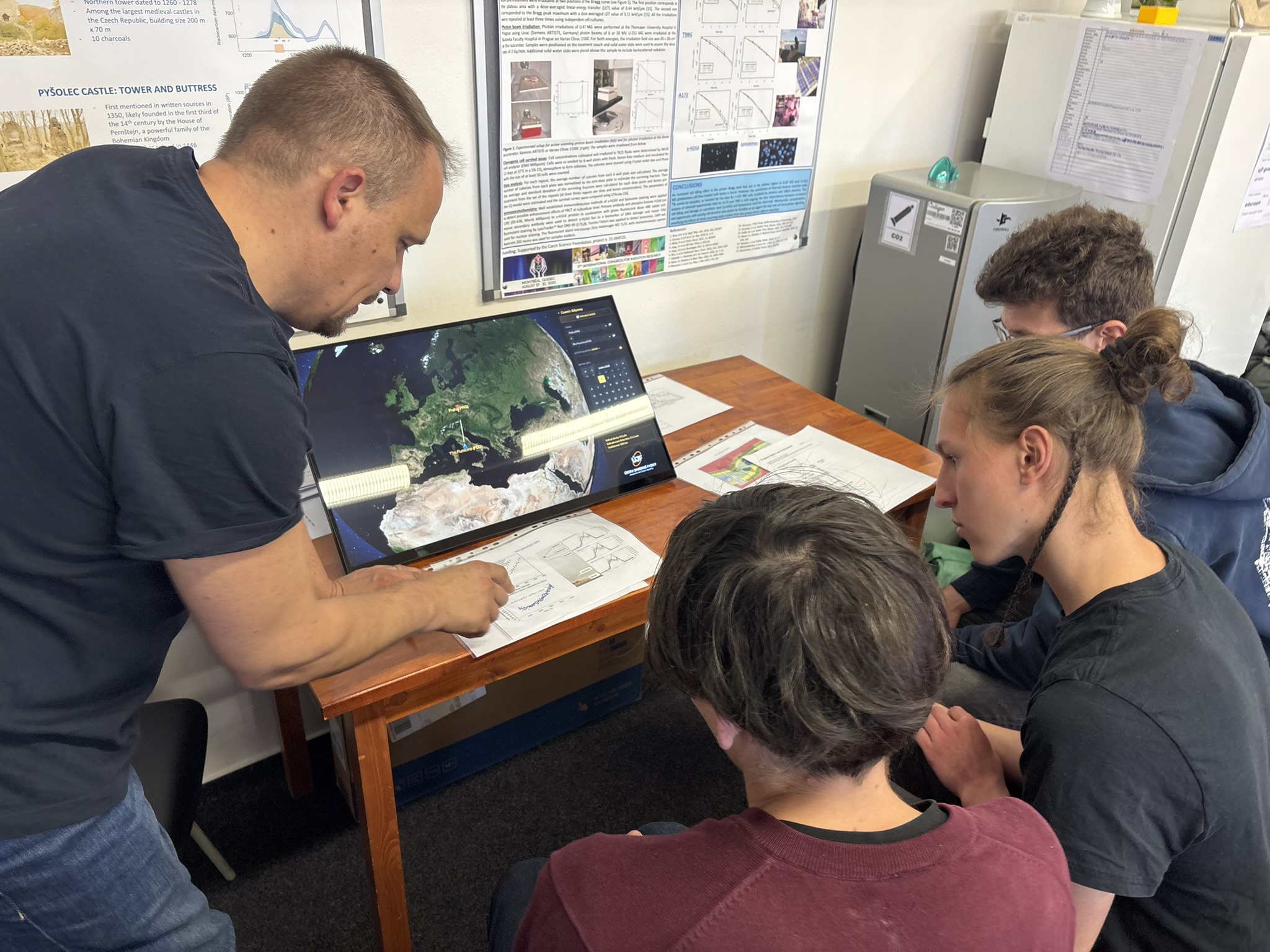
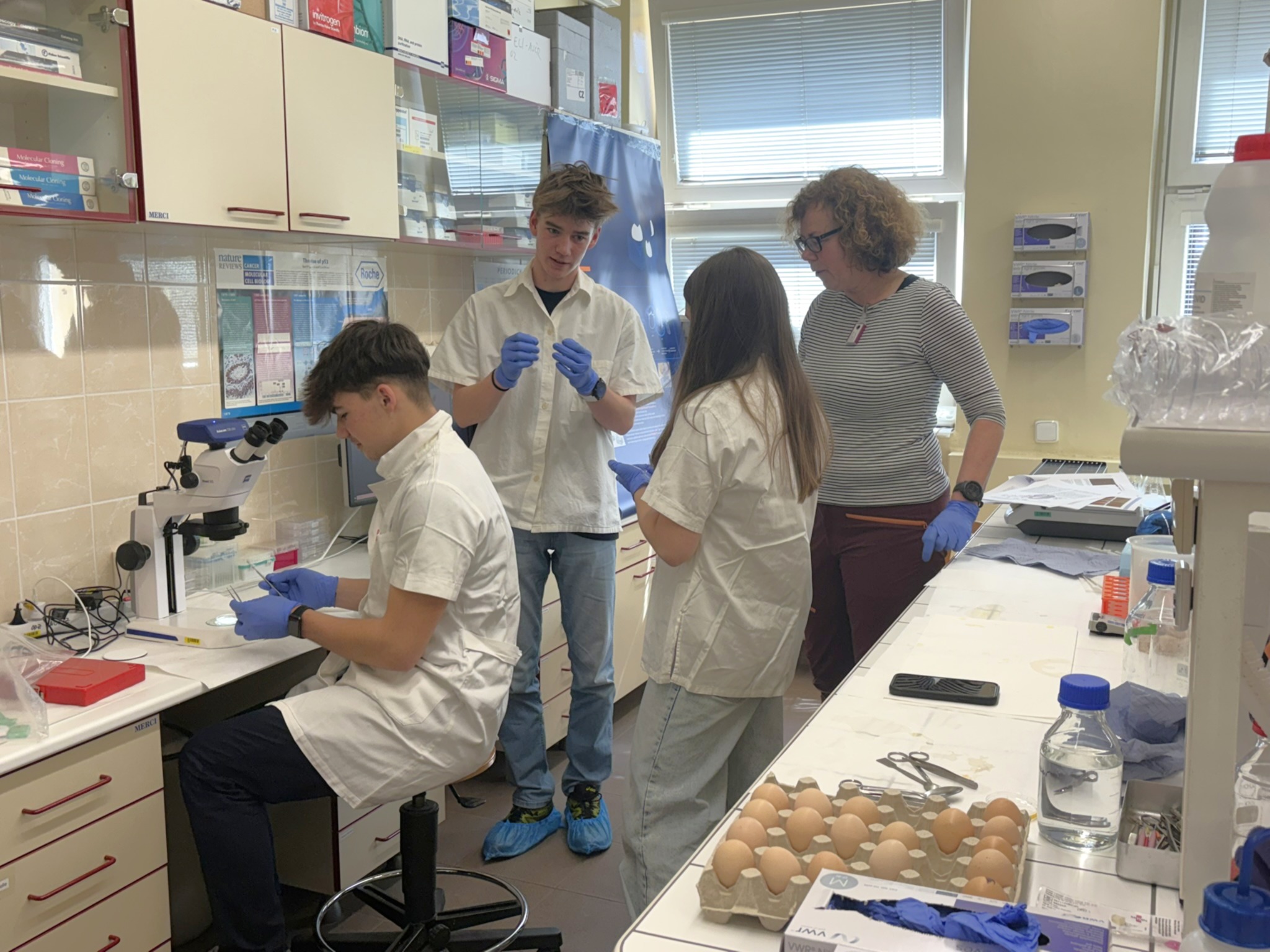
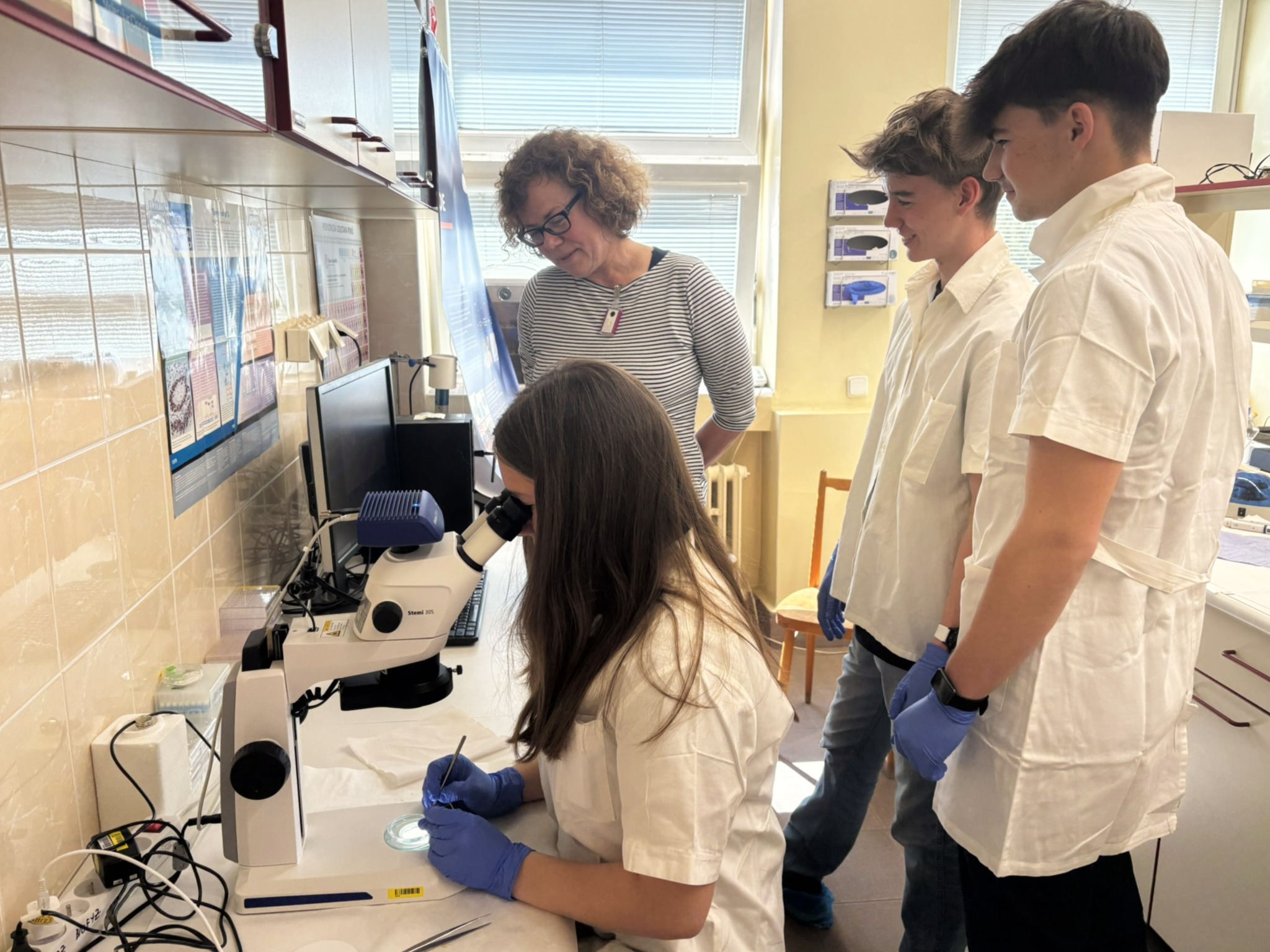
Participants were then divided into smaller groups and rotated through a series of thematic stations focused on various aspects of space research and radiation protection. In the radiobiology laboratory, under the guidance of Dr Martina Zíková and Dr Zuzana Vaitová, the students tried preparing a chicken embryo sample and subsequently observed it under a microscope. They also examined radiation-induced cell damage using microscopy. Dr Iva Ambrožová introduced the students to the principles of thermoluminescent dosimeters and demonstrated how to analyse tracks of heavy charged particles in track detectors using microscopic images. Together with Dr Ondřej Ploc, the students also calculated, using an interactive application, the radiation dose a person receives during an airplane flight.
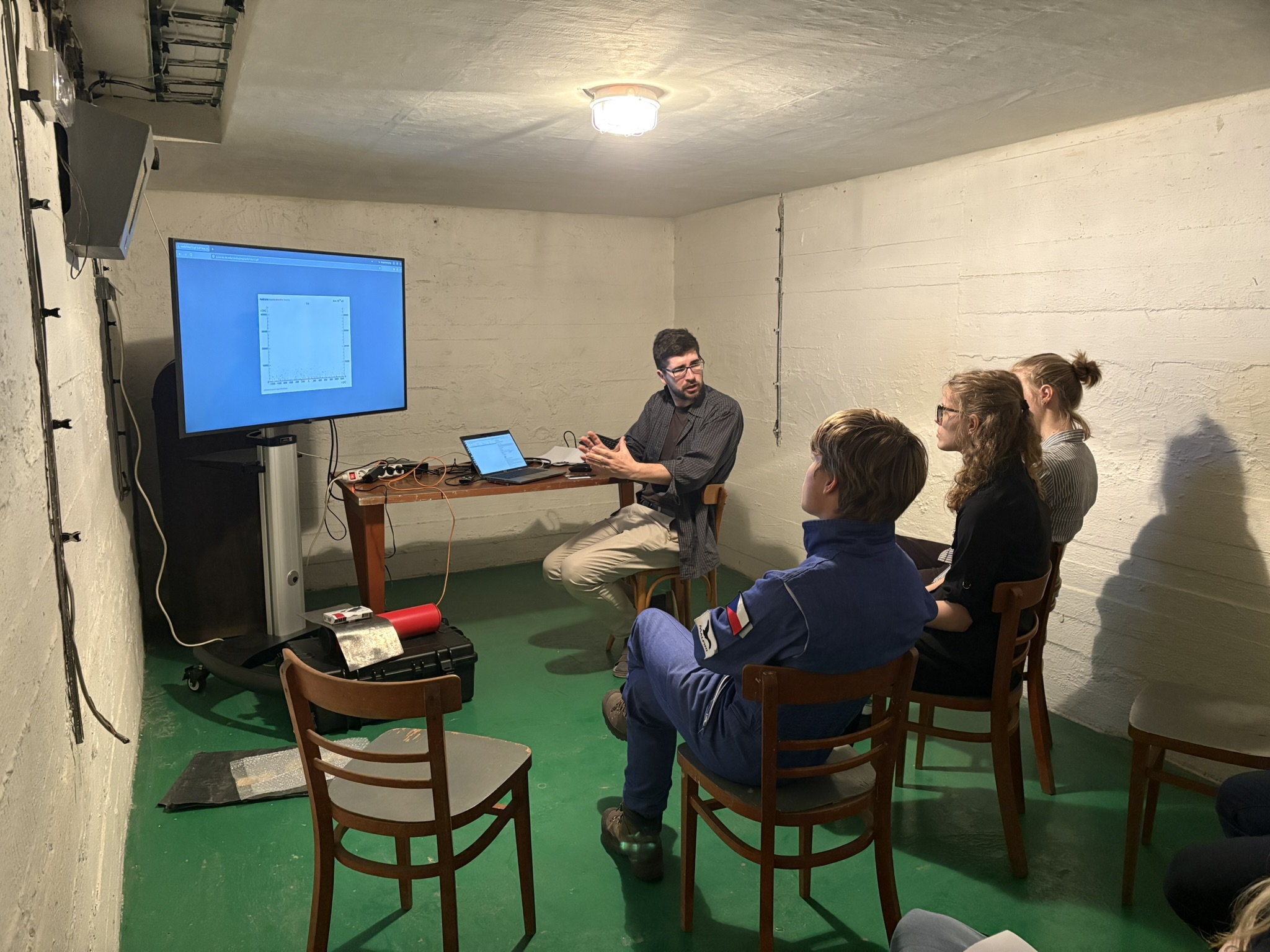
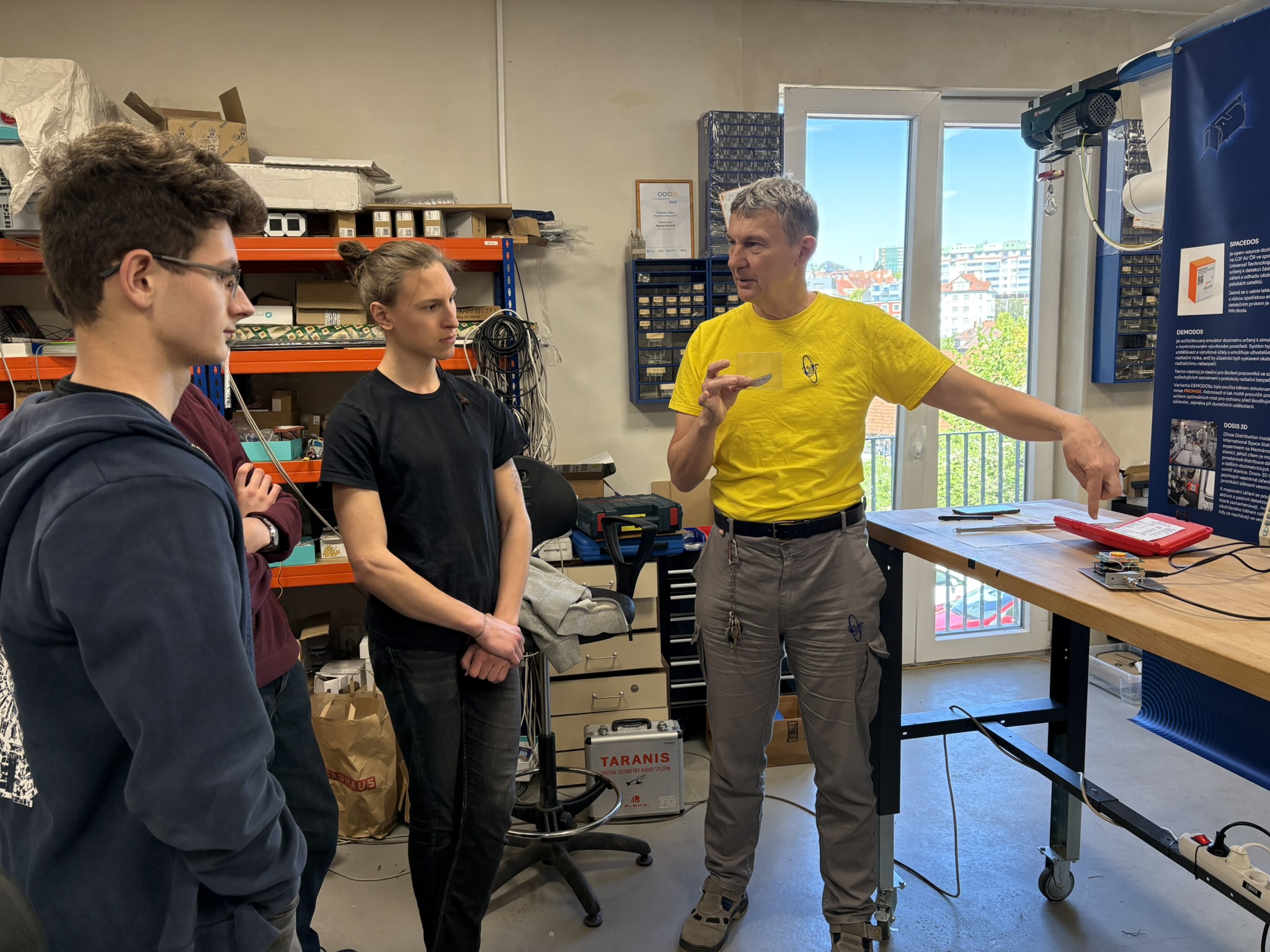
The programme also included a visit to a civil defence shelter, where the ambassadors learned about methods for simulating and measuring ionising radiation, as well as a tour of the drone hangar. There, the cadets were introduced to the principles of energetic particle detection using the engineering model of the SPACEDOS detector, currently being developed as a personal dosimeter for the Czech astronaut mission within the CZPAD project. During this activity, the students observed particle responses in a semiconductor detector and tried working with an oscilloscope themselves.
The programme was designed to provide young participants with practical insight into research related to the space environment and to demonstrate how Czech scientific institutions such as the Nuclear Physics Institute contribute to international space activities.
The Zero-G programme brings together young ambassadors of the Czech Journey to Space initiative who successfully completed a demanding selection process and, in 2025, participated in a parabolic flight simulating weightlessness aboard a specially modified Airbus A310 aircraft. The programme gives participants a unique opportunity to gain insight into the world of space research and to popularise it among their peers.
Read also
- NPI at the Children’s Day of young scientists
- Seminar Marking the 100th Anniversary of the Formulation of the Schrödinger Equation
- SPACEDOS dosimeter passed another important test ahead of the ISS mission
- An international experimental campaign focused on superheavy element research took place at the NPI
- Ondřej Srba appointed new Head of the Department of Radiation Dosimetry at the NPI
- Jane Hvolbaek Nielsen appointed new Director General of ESS
- Jane Hvolbaek Nielsen appointed new Director General of the European Spallation Source (ESS)
- KATRIN experiment approaches the final phase of neutrino mass measurements
- Martin Kákona commented on the Artemis II mission
- Jan Vaněk played a key role in a study published in NATURE
