
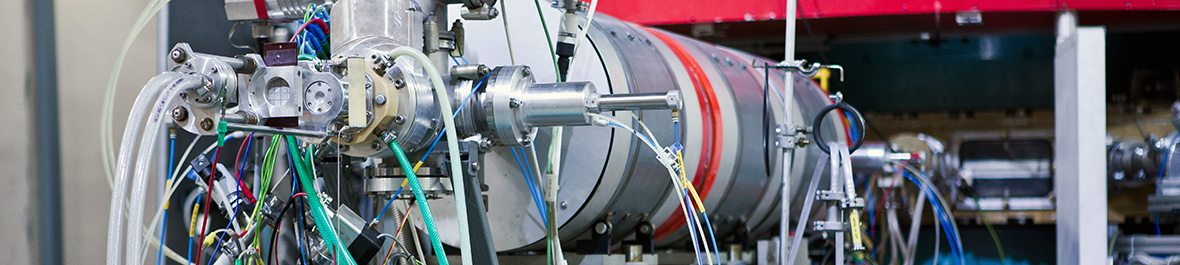
KATRIN experiment approaches the final phase of neutrino mass measurements
23. 04. 2026
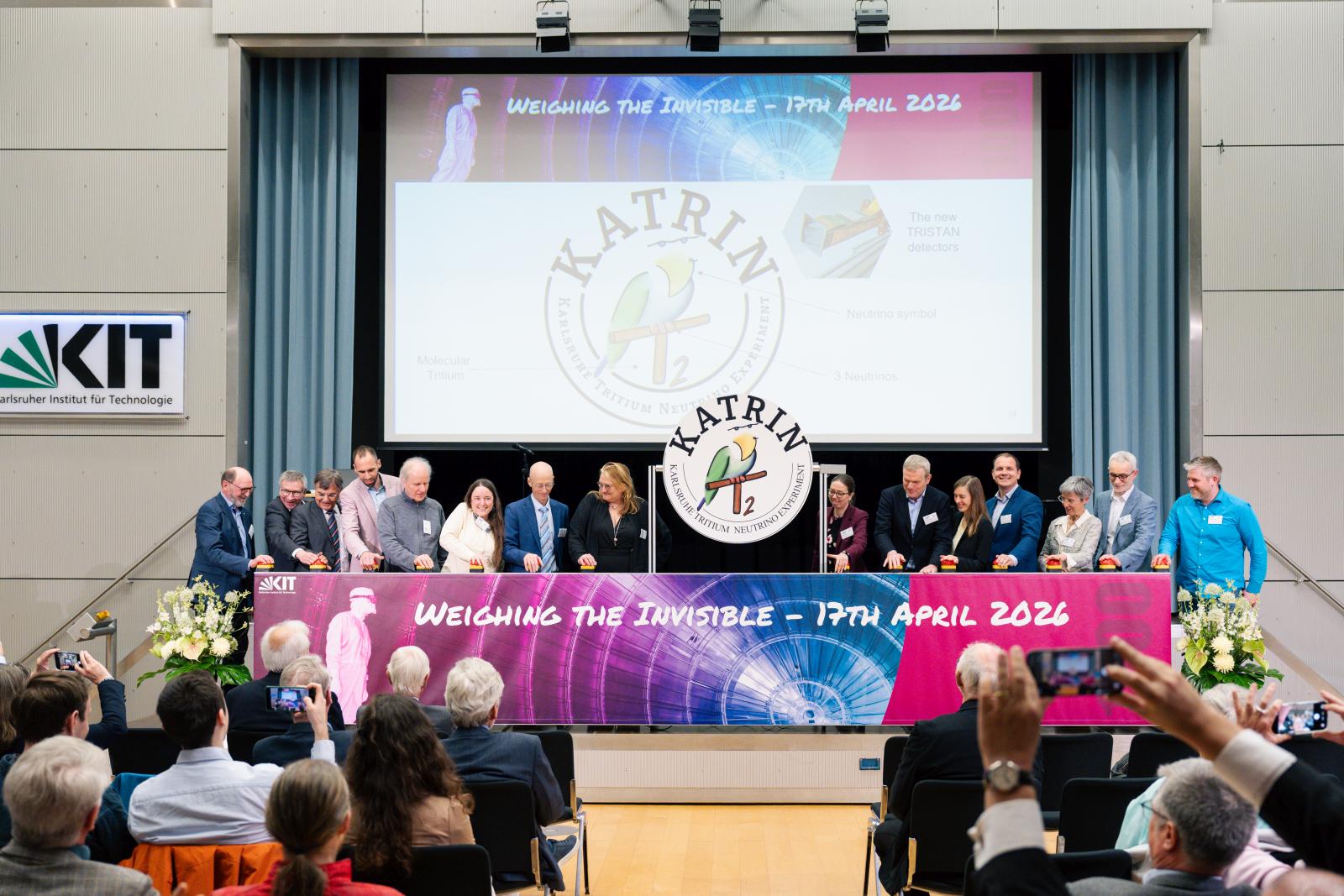
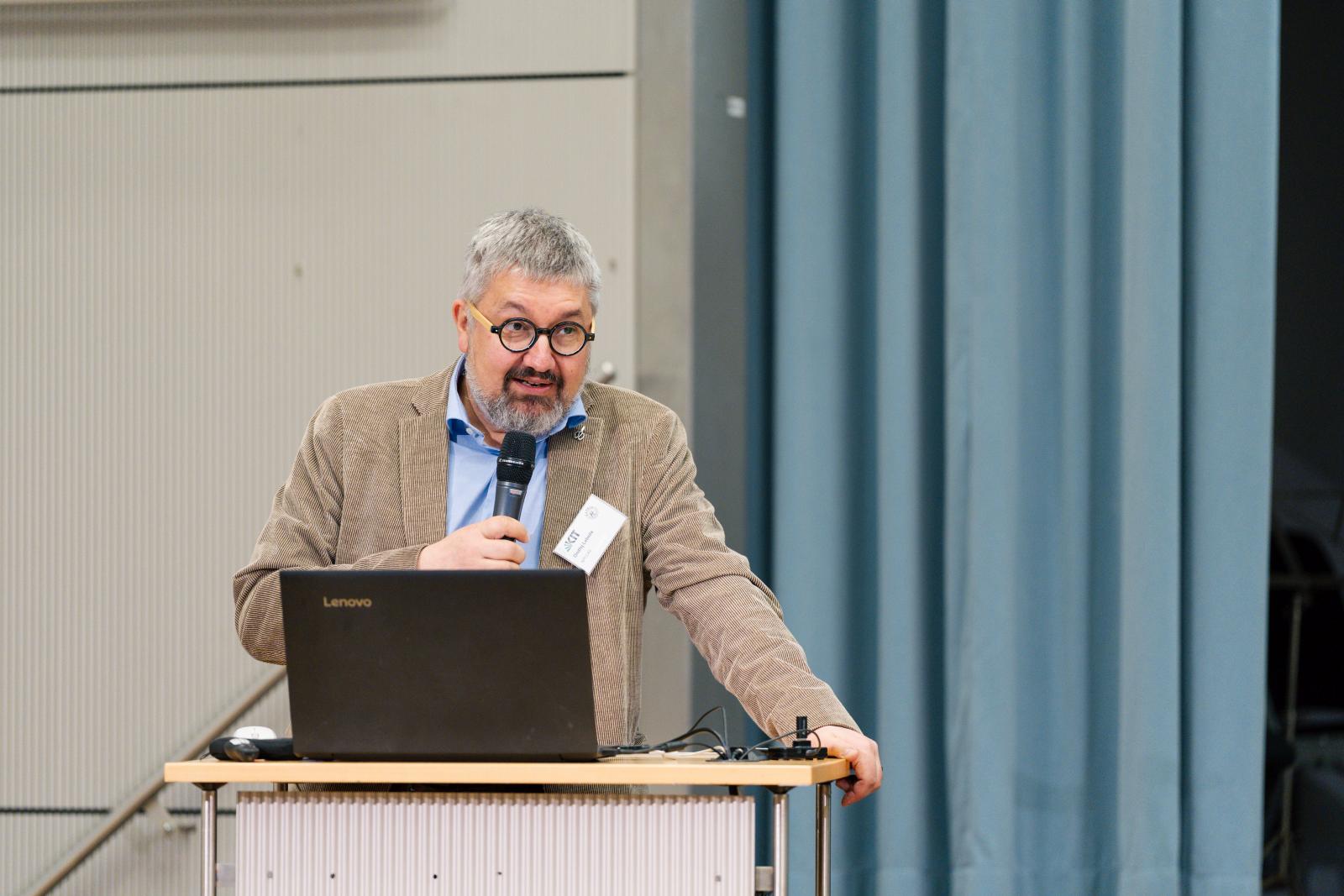
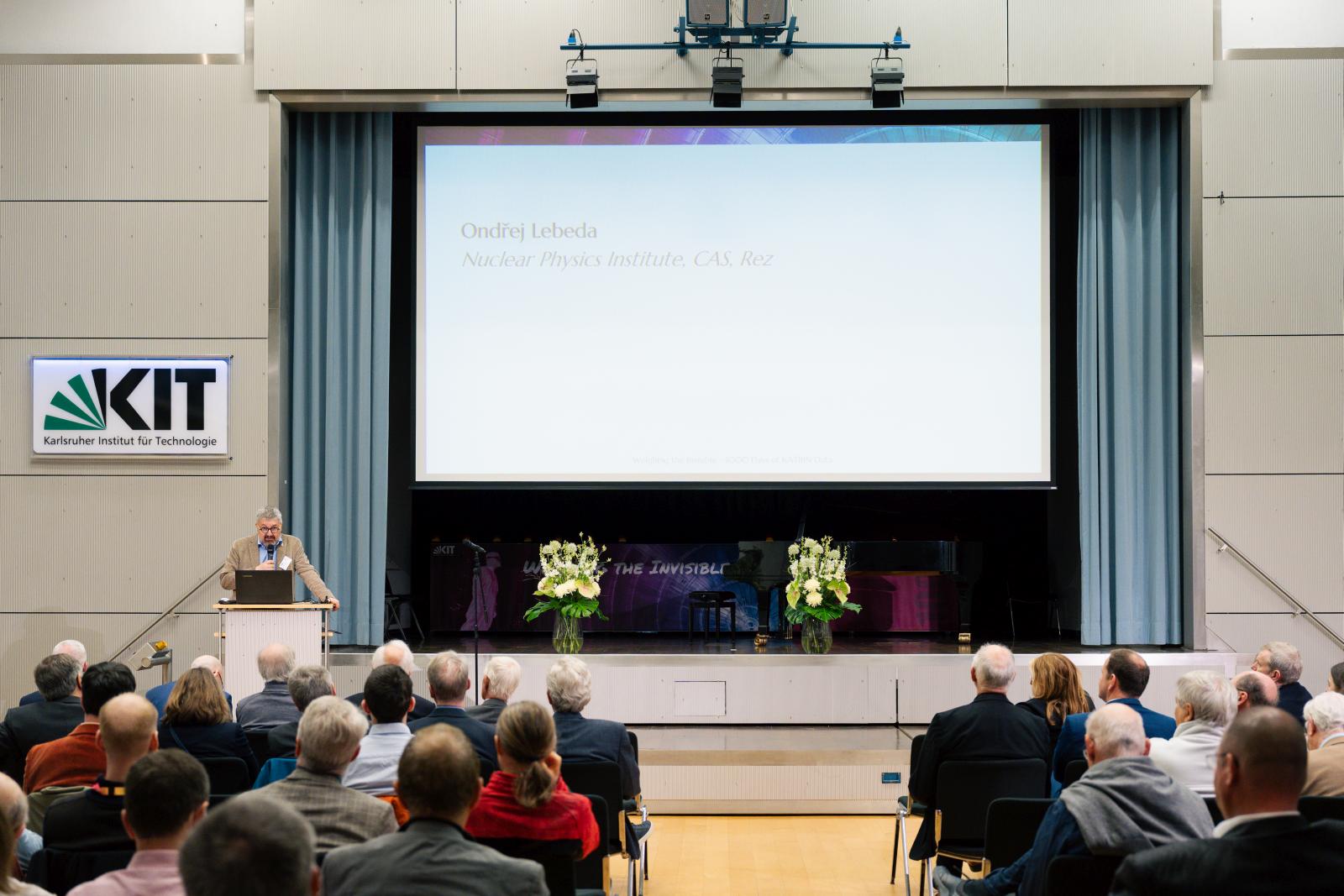
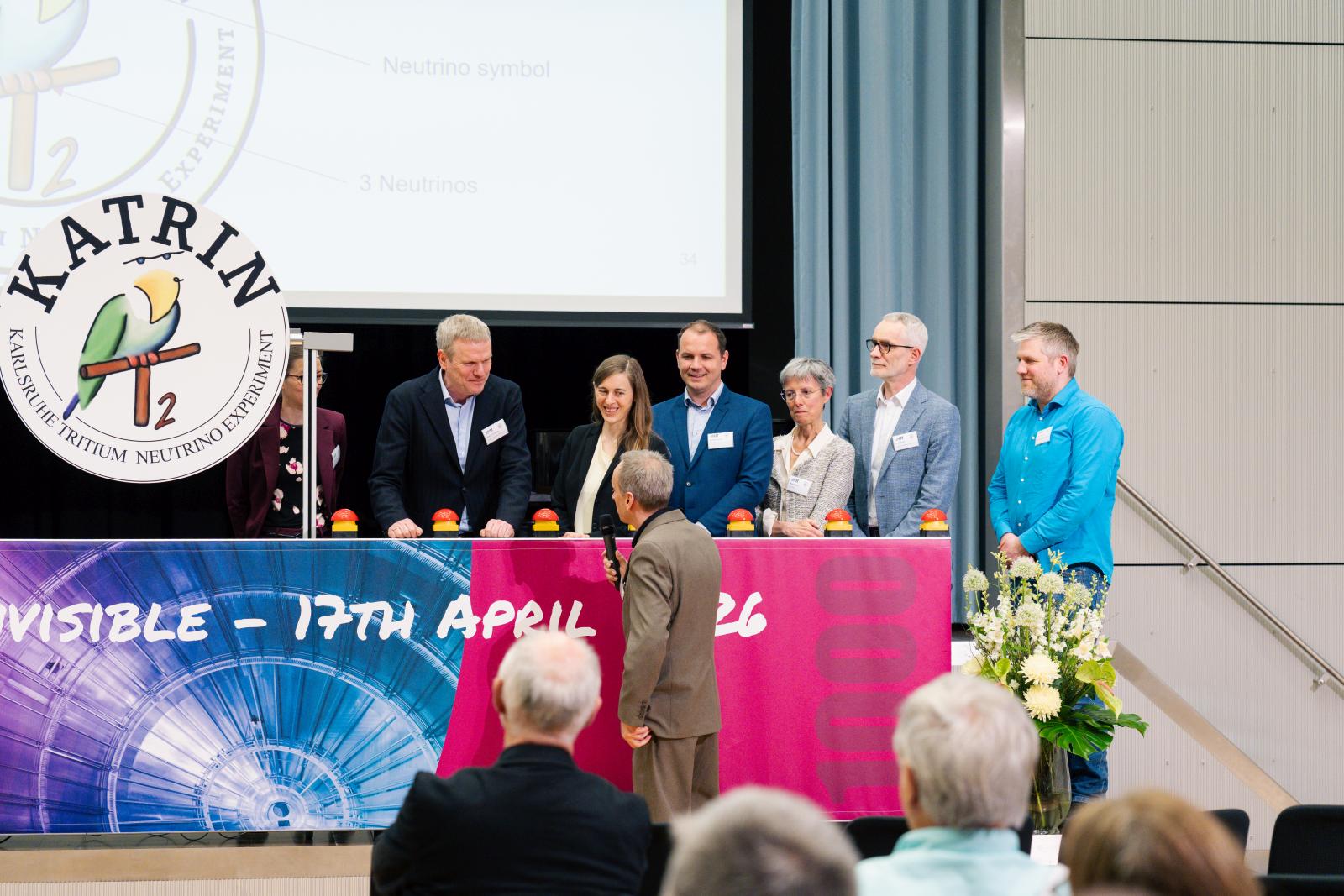
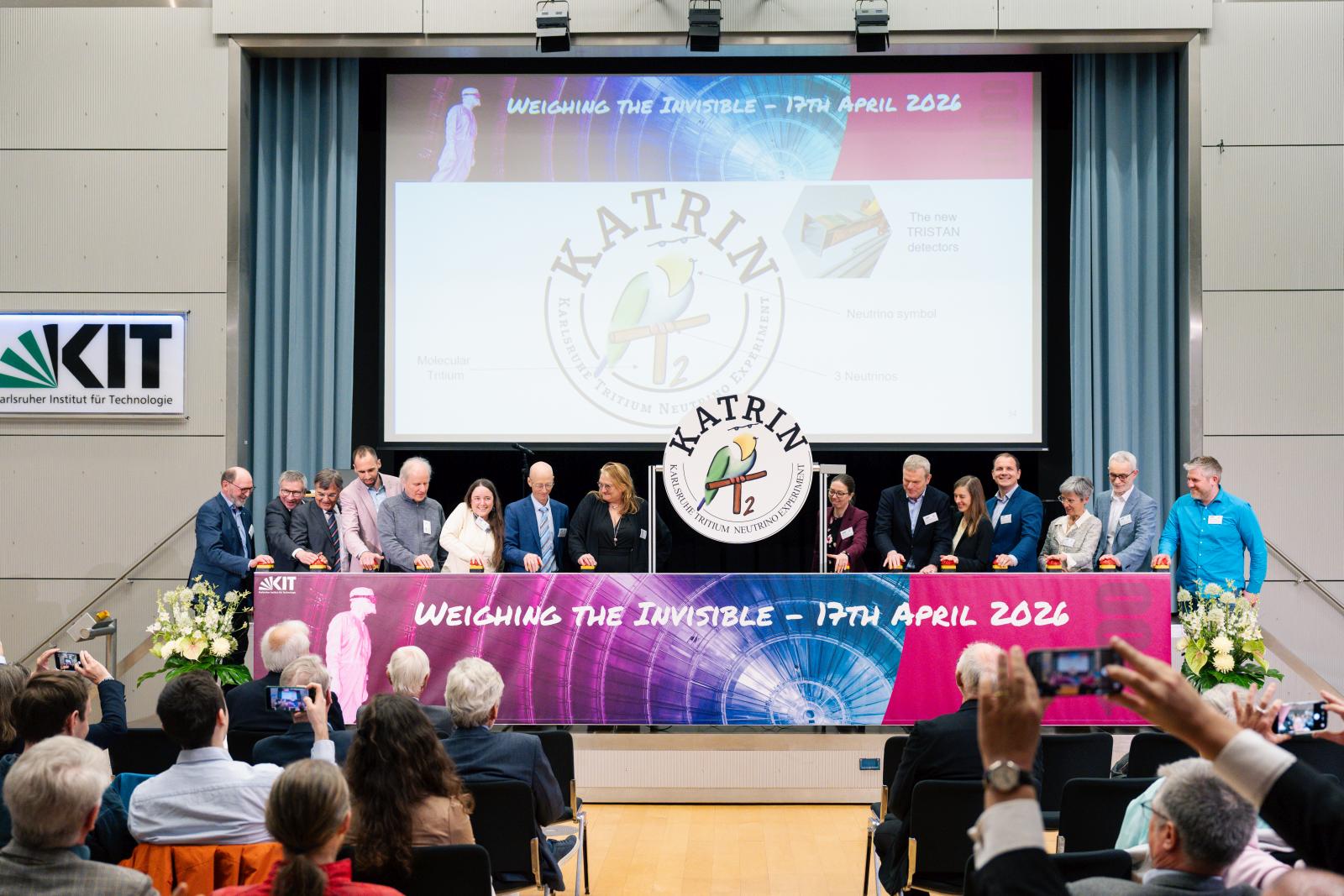
On 17 April 2026, a symposium titled “Weighing the Invisible – Celebrating 1000 Days of KATRIN Data” was held at the Karlsruhe Institute of Technology (KIT) in Germany to mark the achievement of 1,000 measurement days of the international KATRIN experiment (Karlsruhe Tritium Neutrino Experiment). The experiment was also co-founded by scientists from the Nuclear Physics Institute of the Czech Academy of Sciences.
During this period, the international collaboration investigated the endpoint region of the tritium beta-decay spectrum with unprecedented sensitivity, pushing the limits of direct neutrino mass measurements. Although the analysis of the acquired dataset is still ongoing, this key phase of measurements has now been completed.
The symposium brought together the international scientific community, collaborating institutions and industry partners, as well as representatives of public authorities. The programme included scientific talks on neutrino physics, presentations of the experiment’s results, and discussions on follow-up projects TRISTAN and KATRIN++, which will build on the capabilities of the existing experimental infrastructure. The event also featured guided tours of the KATRIN spectrometer hall and the adjacent tritium laboratory.
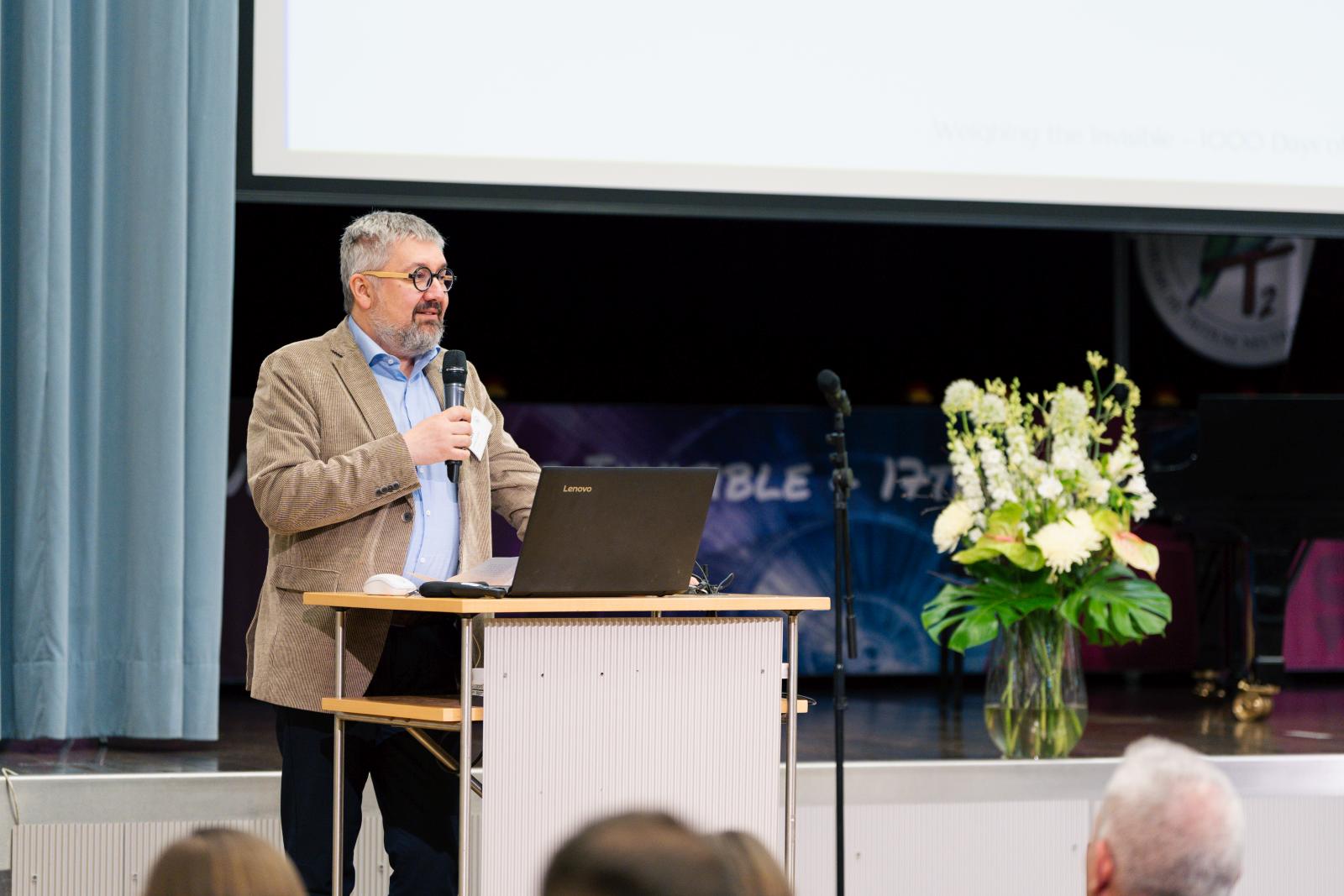
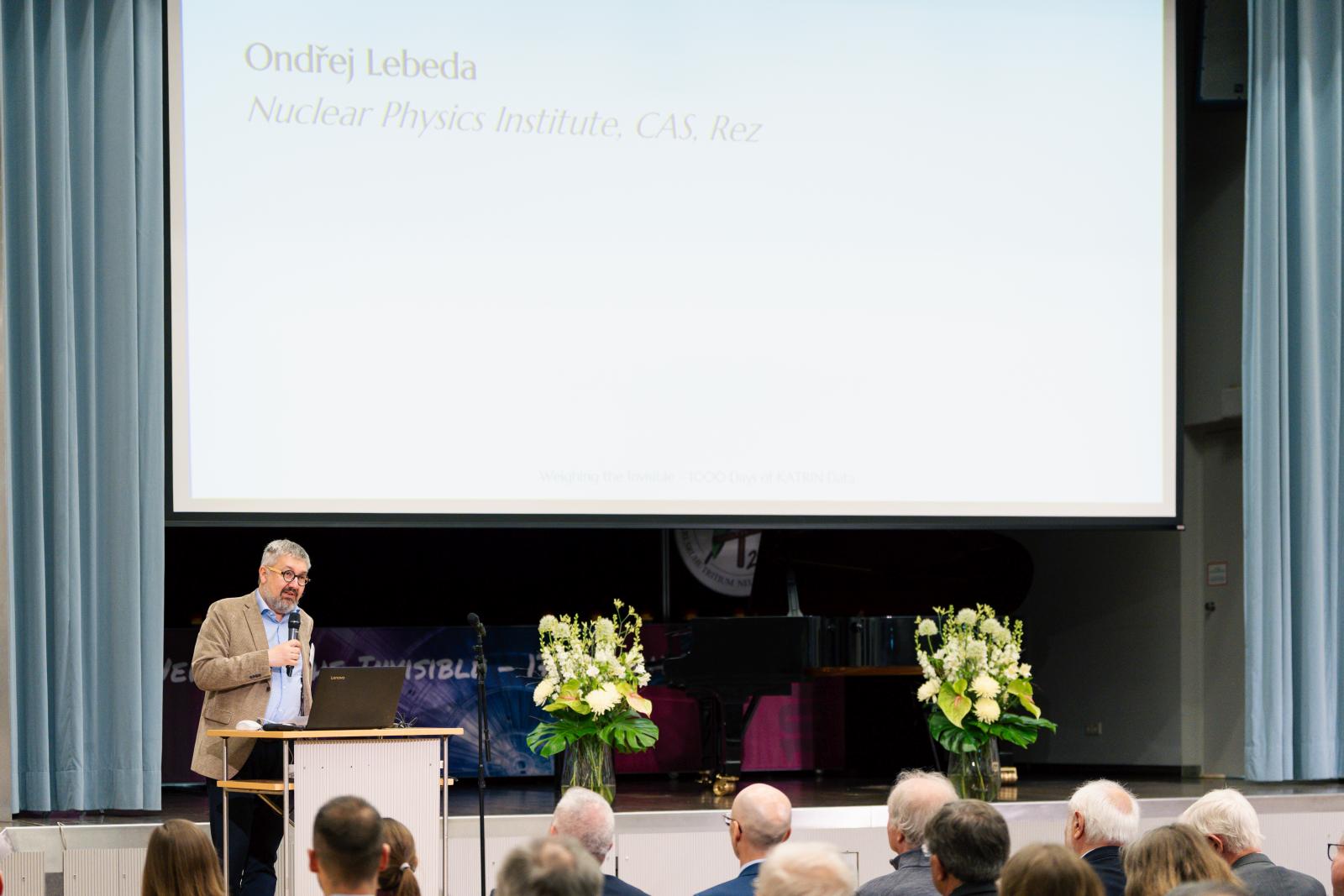
Researchers from the Nuclear Physics Institute of the Czech Academy of Sciences have been long-term contributors to the KATRIN project, namely Mgr. Drahoslav Vénos, CSc. (group leader), Ing. Otokar Dragoun, DrSc. (emeritus scientist), Prof. Ing. Ondřej Lebeda, Ph.D., and Mgr. Jan Ráliš, Ph.D. The symposium was also attended by the Director of the NPI, Ing. Ondřej Svoboda, Ph.D.
The KATRIN experiment was established in 2001 as an international project bringing together research institutions from Germany, the United States, Russia and the Czech Republic. Its goal is to achieve up to a tenfold improvement in sensitivity in determining the neutrino rest mass compared to previous experiments. The entire experimental facility is located at the Karlsruhe Institute of Technology, where it makes use of a unique electron spectrometer and tritium infrastructure. In 2025, the international research team with Czech participation reported in the leading scientific journal Science that its new measurements had set an upper limit on the neutrino mass of 0.45 electronvolts (eV, 1 eV = 1.8 × 10⁻³⁶ kg).
Read also
- Opening of a new laboratory within the FerrMion project
- NPI at the Children’s Day of young scientists
- Seminar Marking the 100th Anniversary of the Formulation of the Schrödinger Equation
- SPACEDOS dosimeter passed another important test ahead of the ISS mission
- An international experimental campaign focused on superheavy element research took place at the NPI
- Cadets of the Zero-G mission visited the NPI Department of Radiation Dosimetry
- Ondřej Srba appointed new Head of the Department of Radiation Dosimetry at the NPI
- Jane Hvolbaek Nielsen appointed new Director General of ESS
- Jane Hvolbaek Nielsen appointed new Director General of the European Spallation Source (ESS)
- Martin Kákona commented on the Artemis II mission
