
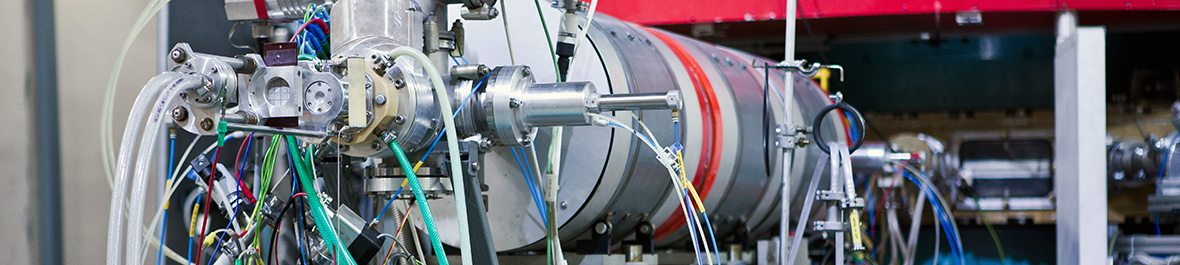
Facilities for the study of nanomaterials
Contact person: Jiří Vacík, e-mail: vacik@ujf.cas.cz
The Laboratory for the Study of Nanomaterials (Materials Research Group using Neutron and Ion Beams – MVNIS) focuses on the preparation, characterization, and modification of thin monolayer and multilayer materials with complex nanostructures (MAX phases, solid-state lithium-ion batteries, metal-fullerene-based hybrid systems, and others) and the investigation of their specific physical properties. The study of nanomaterials (i.e., their preparation, research into their fundamental properties, and potential applications) is conducted using various deposition techniques and analytical methods developed within the CANAM infrastructure at the Nuclear Physics Institute of the CAS.
Deposition techniques:
The Nanomaterials Research Laboratory is equipped with several instruments that enable the preparation of thin films of single- and multi-component composites with complex structures at the nanoscale.
For example, using the Low Energy Ion Facility (LEIF-1) with heavy ion beams in the energy range 100 eV - 35 keV, thin hybrid layers based on carbon (fullerenes) and lithium are prepared by ion sputtering for the study of thin Li ion battery. The LEIF-2 system is intended both for the preparation of thin layers of multielement complex structures using ion sputtering method, and for their further modification by ion implantation or ion bombardment (for the controlled introduction of radiation damage). A molecular epitaxy system (MBE-1) equipped with two e-guns, a high-temperature effusion cell, and an ion gun is used to synthesize ultrathin crystalline materials. A new molecular epitaxy system (MBE-2) equipped with 3 e-guns, 2 effusion cells and an oxygen atom beam source is used to fabricate hybrid films of magnetic particles (ferroics) with C-based structures. To study thin film of hybrid materials based on the combination of transition or noble metals and fullerenes, the UNIVEX system equipped with e-gun and C60 thermal vaporizer are used. The implantation of selected ions on the Tandetron accelerator (Laboratory of Tandetron) is also used for the preparation of nanostructures in thin subsurface layers of substrate materials.
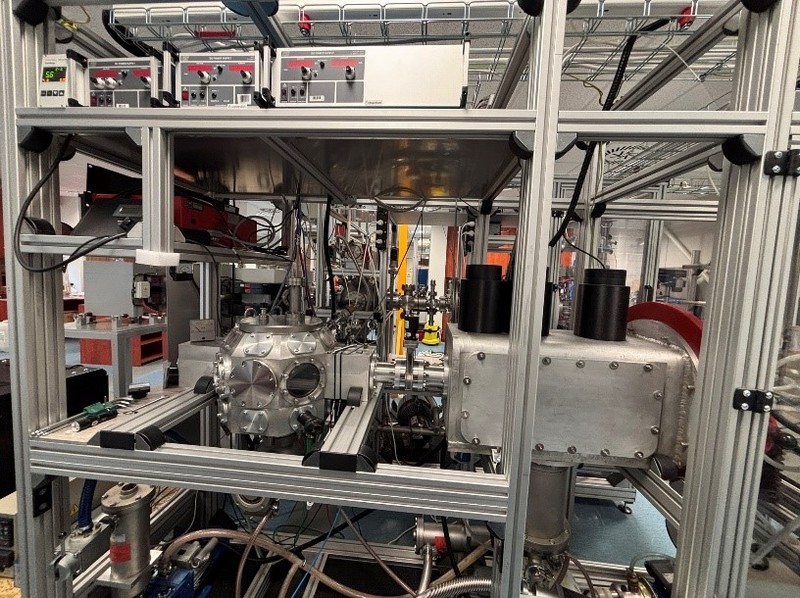
LEIF 1 is equipped with a Duoplasmatron Ion Source for generating intense Ar plasma. The extraction potential can be tune from 1 to 35 kV. A beam of up to 1 mA current can be obtained at the target position, which allows ion beam sputtering and high current ion irradiation of samples to be performed. Up to 6 sputtering targets can be installed in the system to grow thin multilayers. A thermal/resistive evaporator can also be installed in the chamber for co-deposition experiments.
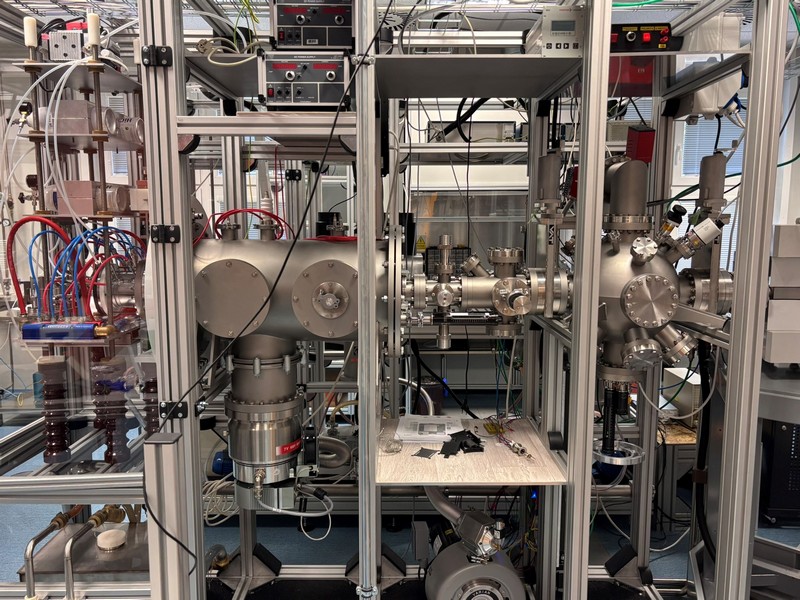
LEIF 2 was designed as an evolutionary and new generation LEIF device, with the installation of a multicusp ion source and new ion optics based on the Einzel Lens and deflection table, the device can produce a beam from many different gases and also from a mixture of gases (the gas can be mixed directly on the ion source the extraction potential can be tuned from 1 to 35 kV. For irradiation purposes (up to 100 keV/z) a dipole magnet and a second ion beam line are available.
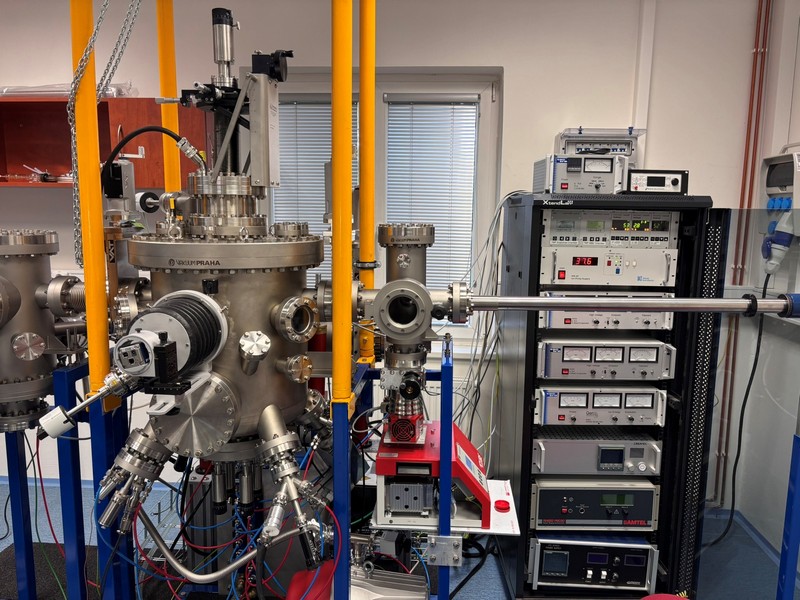
The MBE 1 system is equipped with 2 e-gun vaporizers that can operate in effusion cell mode or e-gun sputtering mode, 1 high temperature effusion cell and 1 ion source for ion assisted deposition. The RHEED system is available to study the evolution of nanofilms during growth. The basic pressure of the system is in the range of 10-9 - 10-10 mbar.
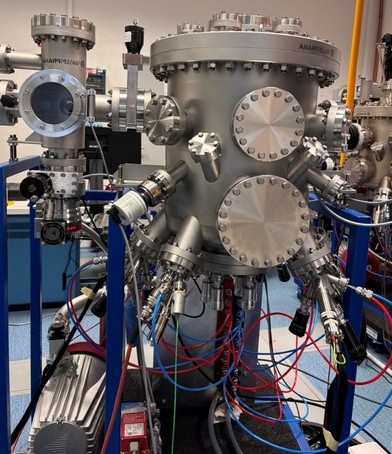
The MBE 2 system is equipped with 3 e-gun vaporizers that can work in effusion cell mode or e-gun sputtering mode, 1 high temperature effusion cell, 1 low temperature effusion cell and 1 oxygen atom beam source for oxide cultivation. The basic pressure of the system is in the range of 10-9 mbar.
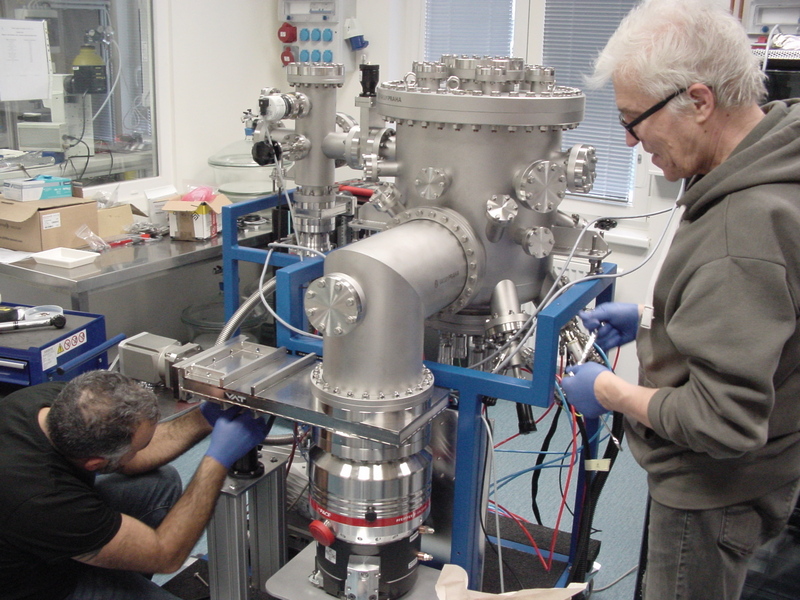
The MBE 2 system is equipped with 3 e-gun vaporizers that can work in effusion cell mode or e-gun sputtering mode, 1 high temperature effusion cell, 1 low temperature effusion cell and 1 oxygen atom beam source for oxide cultivation. The basic pressure of the system is in the range of 10-9 mbar.
Analytical methods:
The analysis of prepared (or modified) thin layers is carried out by several main methods that are available in the MRNIB laboratories operating within the CANAM infrastructure: AFM (Atomic Force Microscopy), VDP (Van der Pauw) method, NBA (Neutron Beam Analysis) - NDP (Neutron Depth Profiling) and PGAA (Fast Gamma Activation Analysis).
The VdP method measures the average resistivity and Hall coefficient values on thin samples by applying current and measuring the voltage along the sample perimeter.
The IBA methods (RBS – Rutherford Backscattering, PIXE – Particle Induced X-Ray Emission, MB – Micro Beam methods, ion beam irradiation/implantation, etc.) are installed on the ion beam lines of the Tandetron 4130 MC accelerator in the Laboratory of Tandetron. The methods are available in collaboration with the Tandetron group within CANAM infrastructure projects.
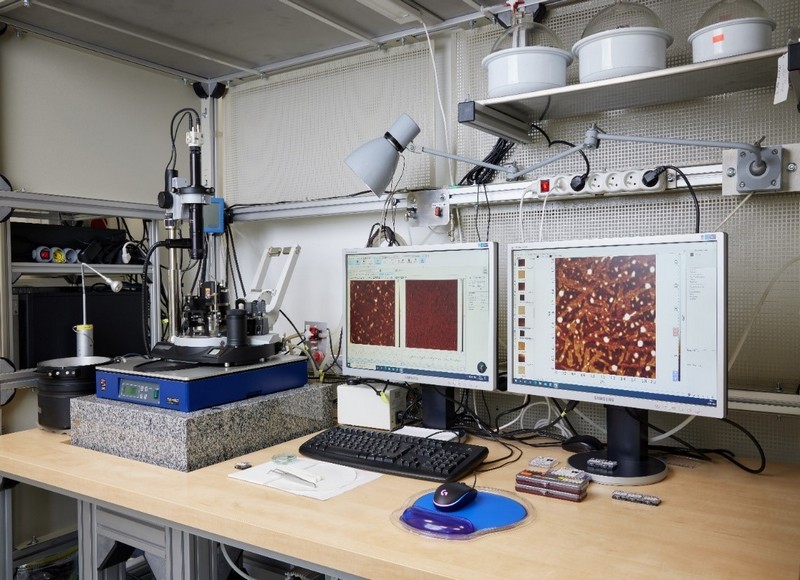
AFM – Scanning Probe Microscope NTEGRA Aura (NT-MDT)
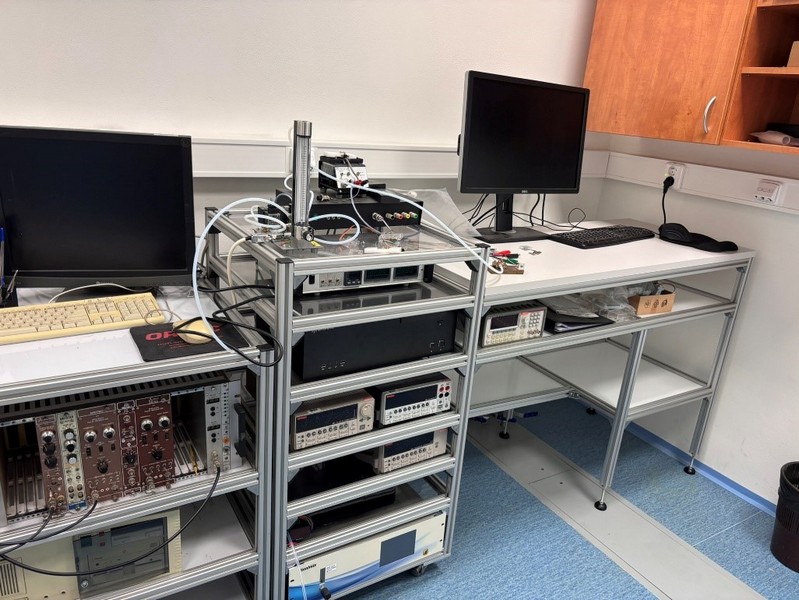
Experimental set-up for analysis of the sheet resistance by Van der Pauw method and device for measurement of gas sensing.
Sample modification methods:
Modification of the prepared samples (thin layers on substrates, thin foils, etc.) can be carried out using several methods.
By irradiating/implanting samples with ion beams with low-energy ions (up to 100 keV at LEIF-2) and high-energy ions (up to several MeV in the Tandetron accelerator) with fluences as needed.
By annealing – several ovens are available for annealing of samples in air, in inert atmosphere, in reactive atmosphere and in high vacuum.
By etching of thin polymer films – for the preparation of membranes with pores of the required size and shape, a reactor with accessories for etching using various etchants is available.
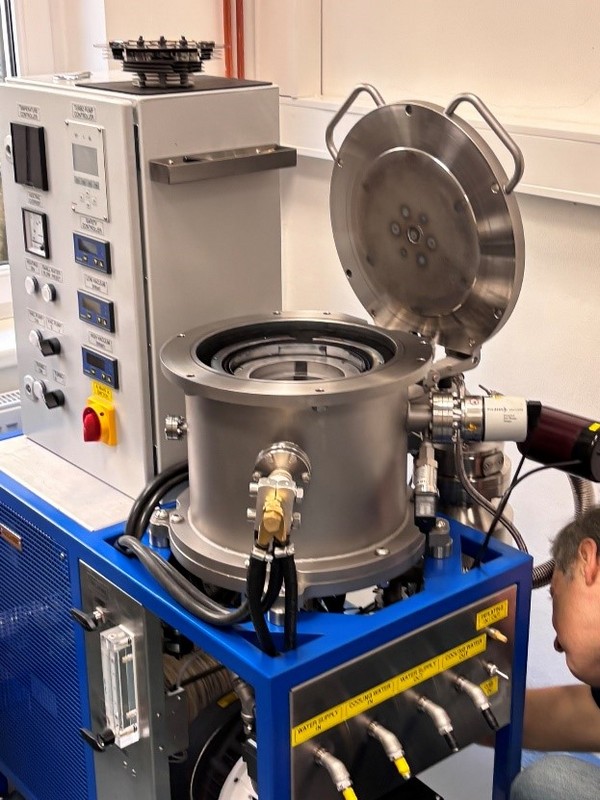
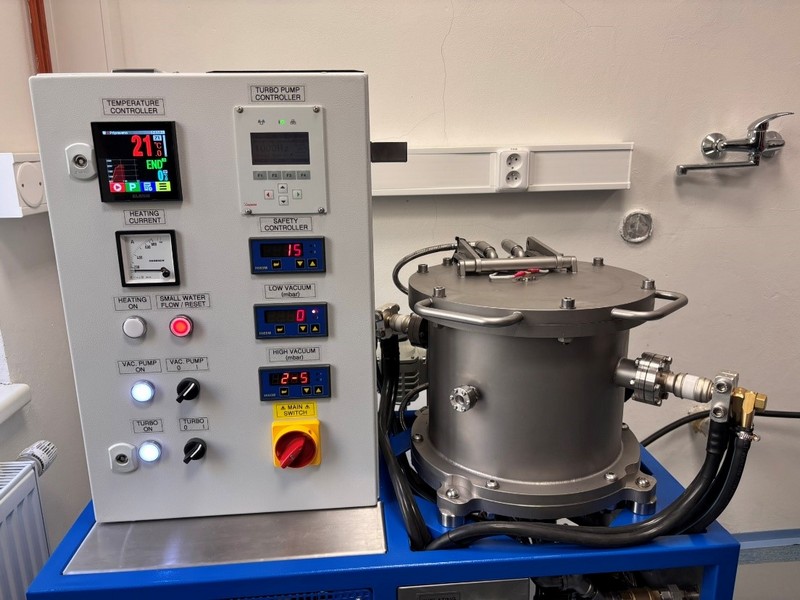
High vacuum oven up to 2300°C
Current Grants
- Title: Ferroic Multifunctionalities
Provider: MEYS CR, OP JAC
1. 2024 - 30. 06. 2028
Principal Investigator: H. Seiner (Institute of thermomechanics CAS) - Title: Black metals surface-decorated by MXenes as sensitive chemiresistor layers
Provider: GA CR
1. 2023 - 31. 12. 2025
Principal Investigator: J. Vacík (Nuclear Physics Institute CAS) - Title: Preparation and properties of nanoporous membranes with functionalized nanoparticles
Provider: GA CR
1. 2022 - 31. 12. 2024
Principal Investigator: J. Vacík (Nuclear Physics Institute CAS)
