
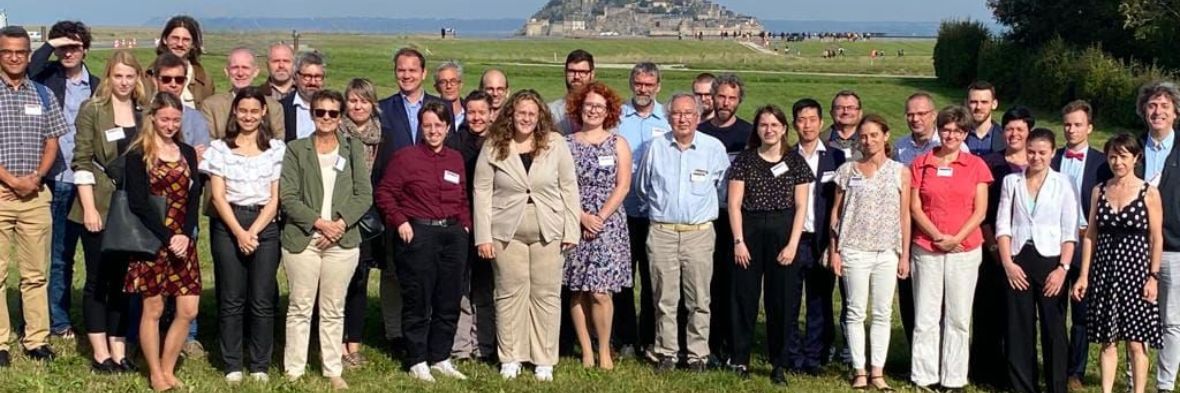
The fourth French-Czech «Barrande» workshop in nuclear research
23. 10. 2023
The fourth «Barrande» workshop, focused on Czech-French cooperation in the field of research and development of nuclear physics, took place in the premises of the Le Relais Saint Michel hotel near the island castle of Mont-Saint-Michel, France, on October 11-12, 2023.
The main organizer of the workshop was the Grand Accélérateur National d'Ions Lourds (GANIL) in cooperation with its founder, the French Commission for Energy Alternatives and Atomic Energy (CEA), the French Institute in Prague (IFP) at the Embassy of France in Prague and the SPIRAL2-CZ project team from Nuclear Physics Institute of the CAS.
Almost 40 participants from various nuclear fields from France and the Czech Republic presented their contributions and tried to summarize the visions, expansion and direction of future cooperation and research within the working groups.
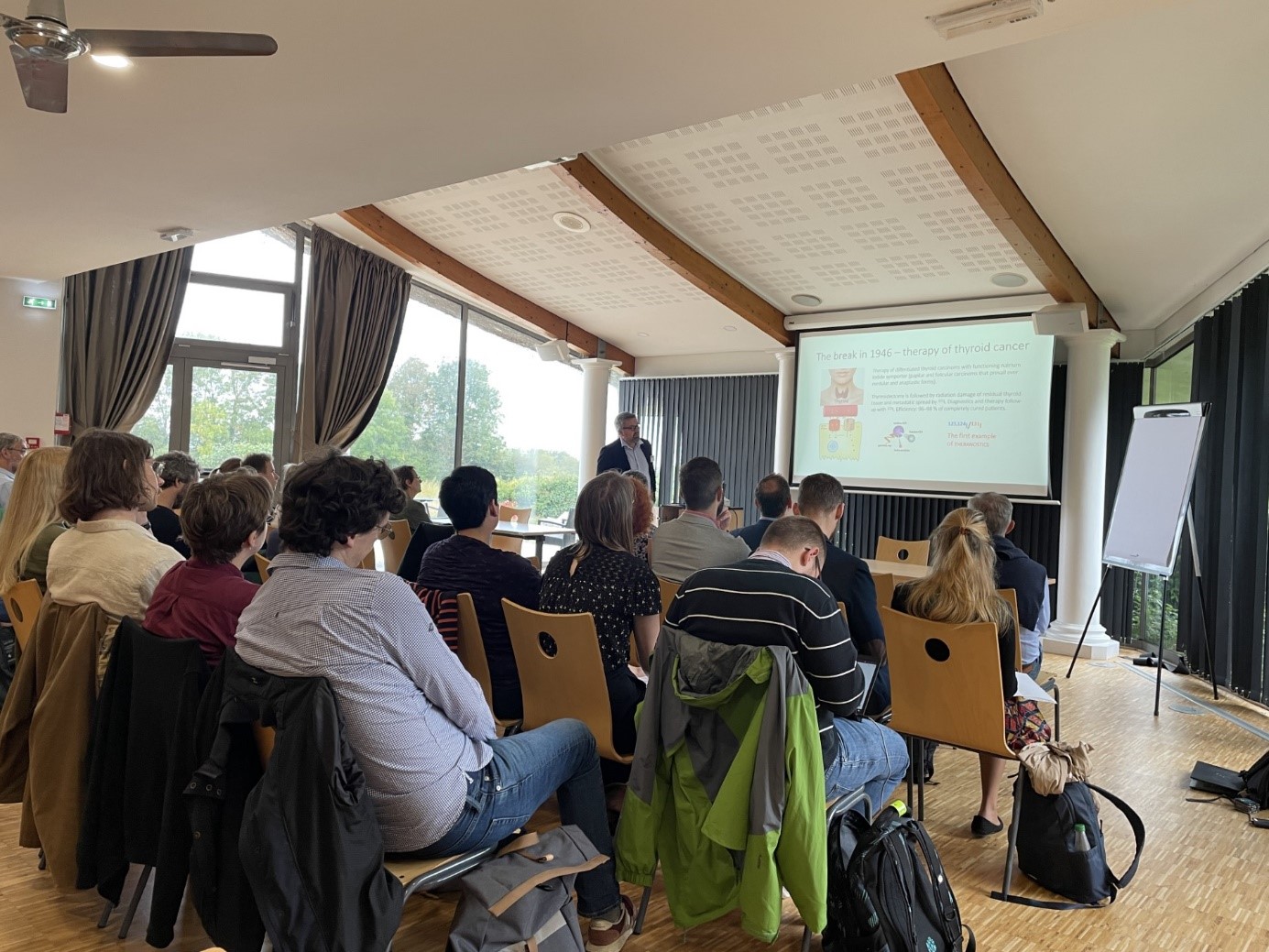
Lecture by Prof. Ondřej Lebeda (in front left) during the «Barrande» 2023 workshop
At the end of the workshop, a solemn ceremony took place with the signing of a bilateral cooperation agreement between the NPI and GANIL/SPIRAL2 within the virtual laboratory NuAG (Nuclear Astrophysics – radiobioloGy) for the following years.
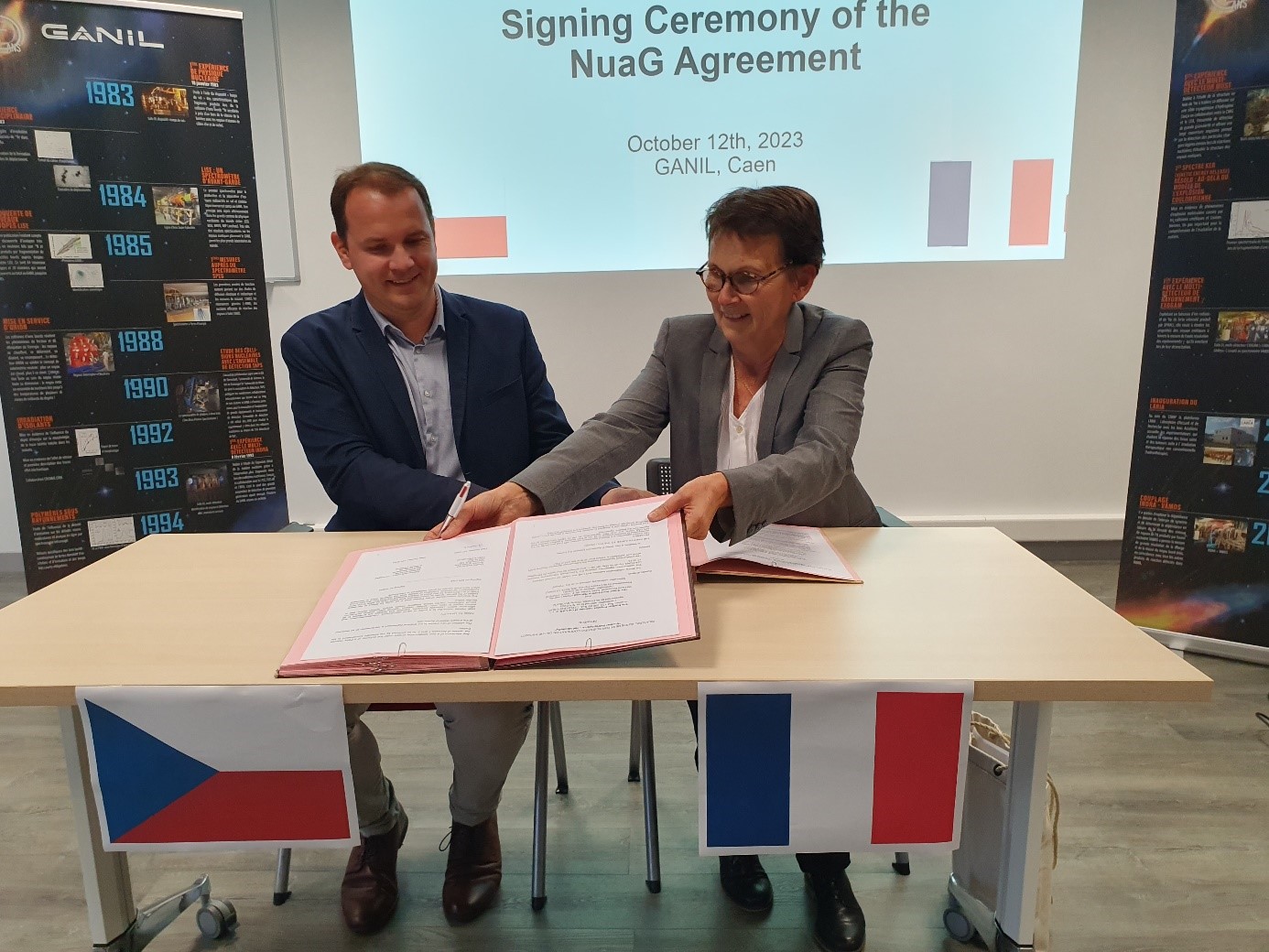
Signing of the NuAG agreement by Ondřej Svoboda, director of the NPI, and Patricia Chomaz,
director of GANIL/SPIRAL2
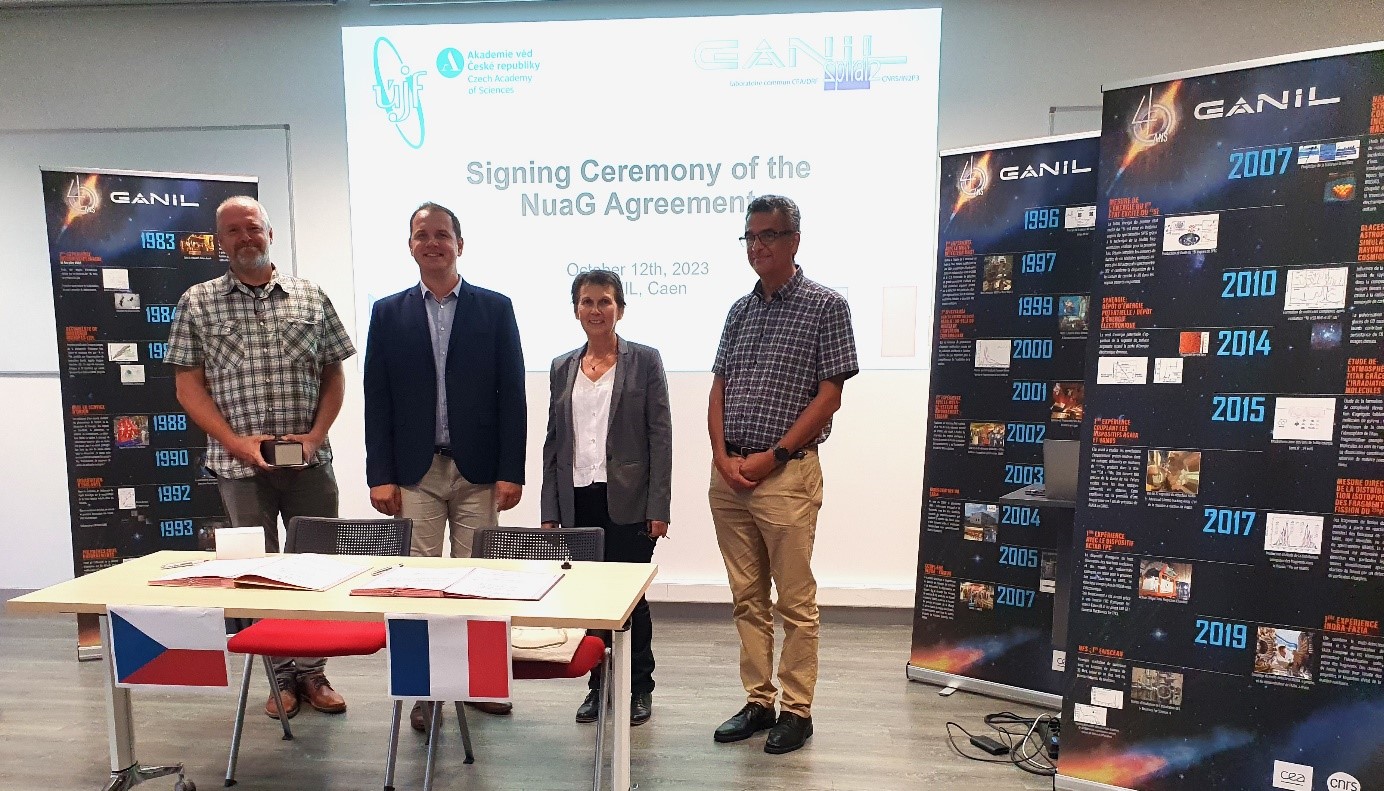
Closing of the signing ceremony with the NuAG virtual laboratory coordinators
Read also
- SPACEDOS detectors meet the limits for operation aboard a spacecraft
- Ivo Světlík awarded the First-class Medal of the Ministry of Education, Youth and Sports
- NPI CAS and Korea’s KINS Strengthen Cooperation in Cosmic Radiation and Aviation Radiation Protection
- NPI CAS organised the 29th international WRMISS workshop
- NPI CAS was the main organizer of the 26th European Conference on Few-Body Problems in Physics
- The Mayor of Brno visited the Laboratory of Microtron
- Describing unusual winter lightning could help extend the lifespan of wind turbines
- The solar eclipse and its impact on cosmic radiation
- 3D scanning helps select eggs for a future ISS mission
- Unique CRL method opens new possibilities for dating prehistoric rock art
