
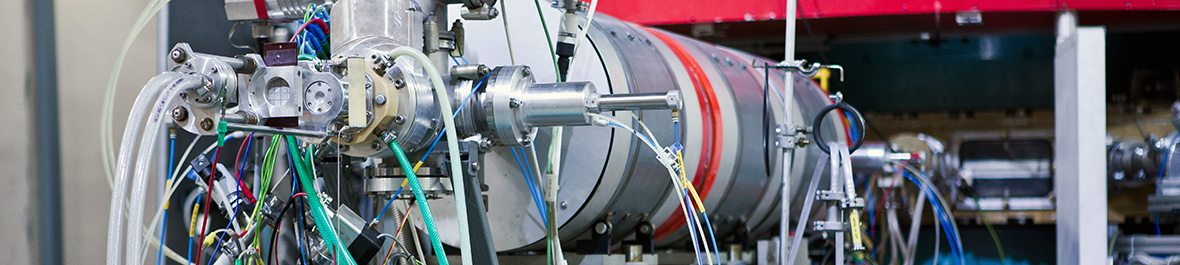
Materials research of NPI published in a prestigious scientific journal
27. 11. 2025
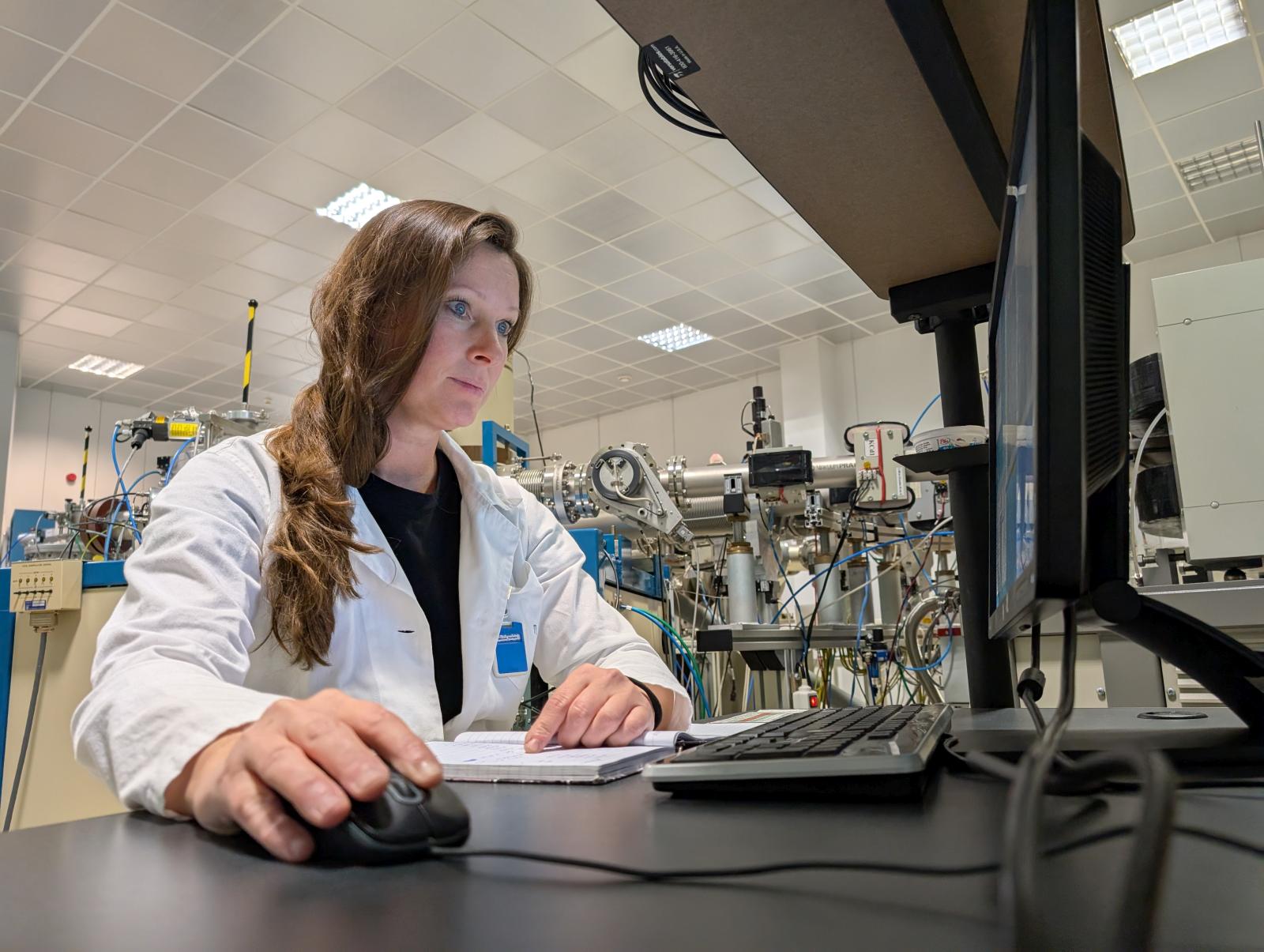
As part of the AMULET project, a study was conducted focusing on the comprehensive preparation of a multiscale composite material and its testing for applications in environmental protection. The goal of the research was to create multifunctional membranes combining the polymer polyethylene terephthalate (PET) with the two-dimensional material molybdenum disulfide (MoS2). The study was published in the Journal of Physics D: Applied Physics (study available for download here).
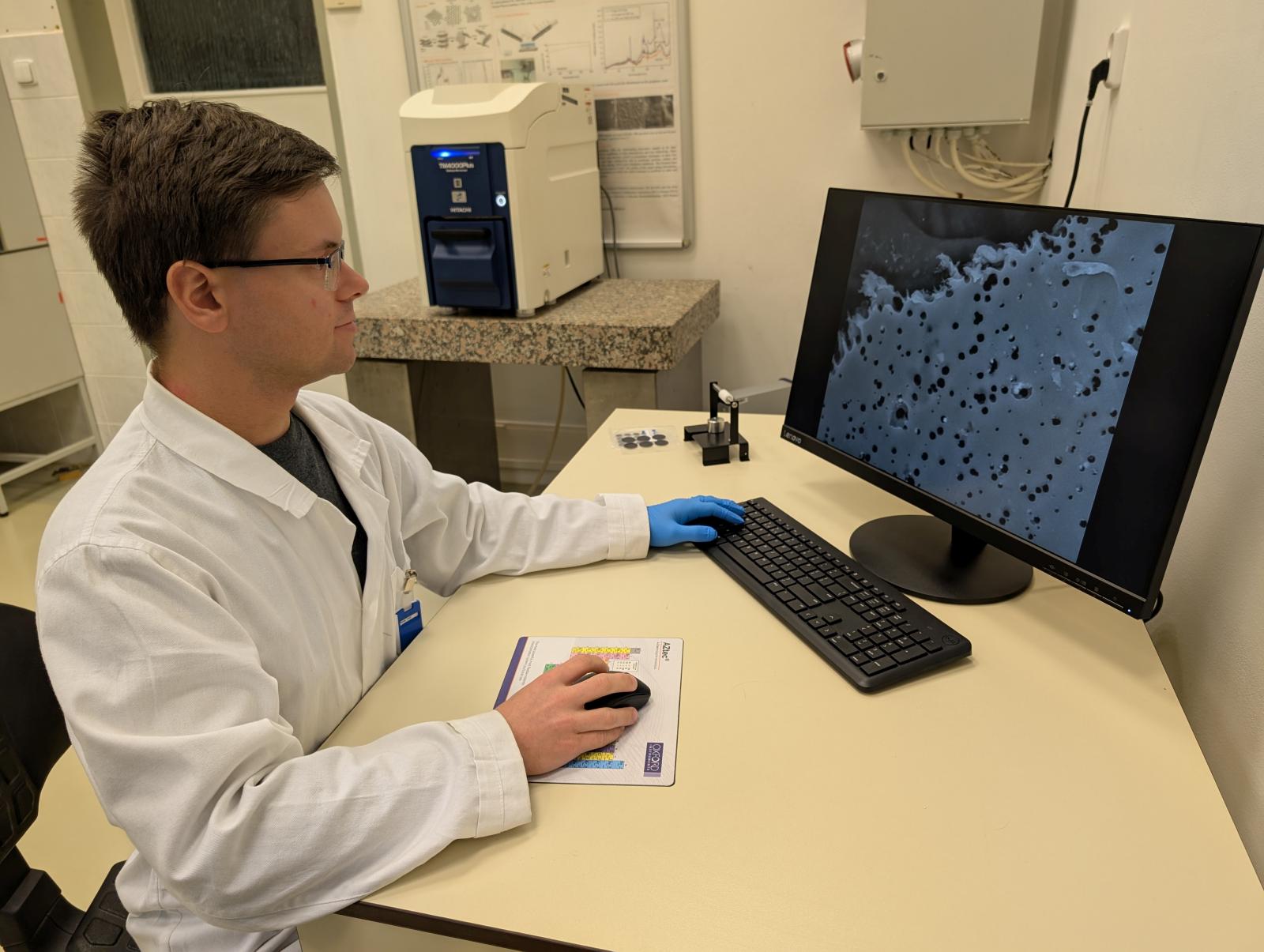
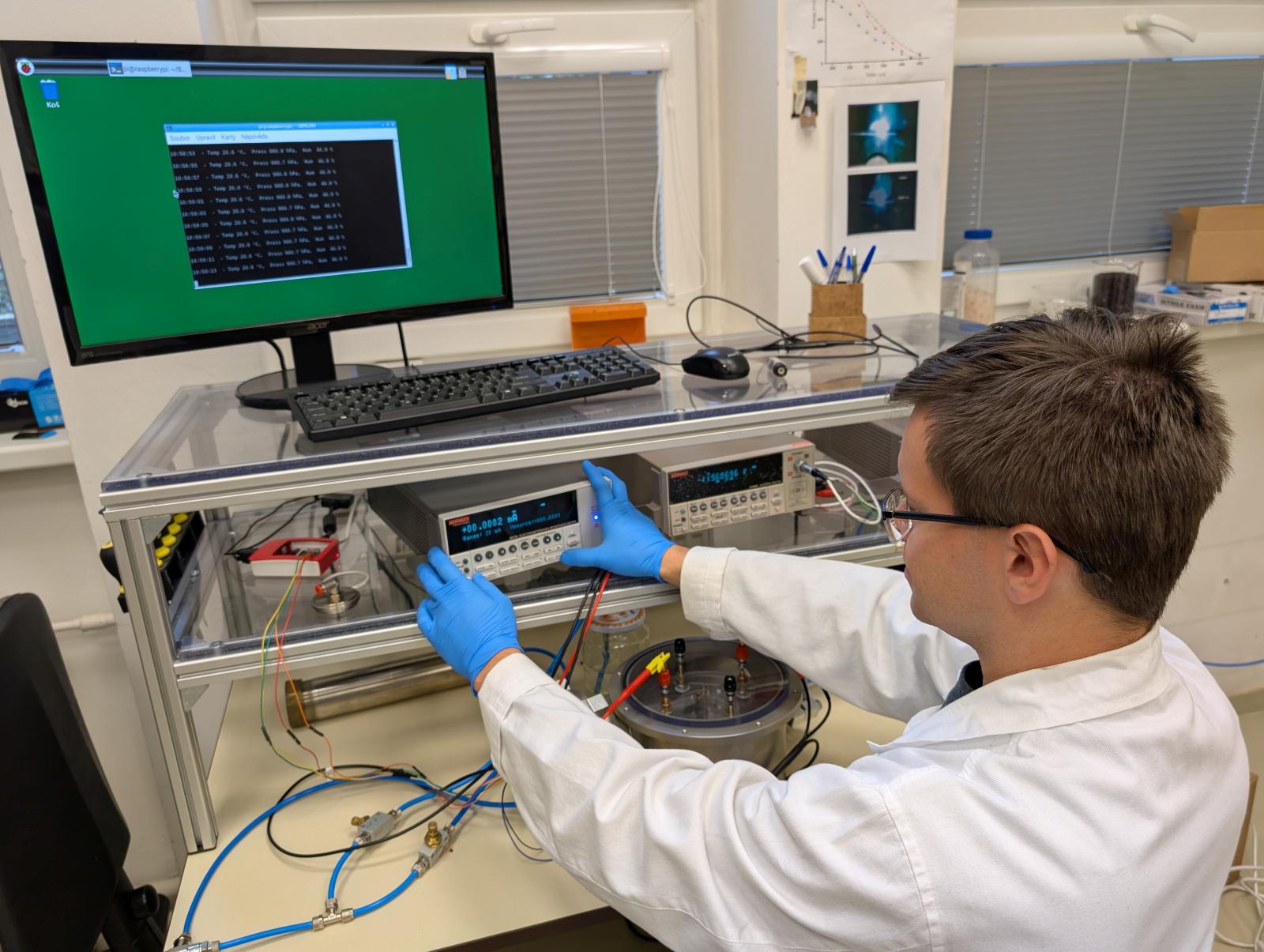
The membranes were prepared through a multistep process: PET films were irradiated with high-energy ions, creating latent tracks in the polymer matrix, which were then stabilized with UV light and chemically etched to form a precisely defined porous structure. Thin layers of MoS₂ were subsequently deposited onto the prepared substrate using pulsed laser deposition (PLD).
The combination of the flexible and cost-effective polymer PET with the layered semiconductor MoS₂ provides unique functional properties, including mechanical stability, high specific surface area, and chemical reactivity, making it an attractive system for environmental and sensor applications. Bisphenol A (BPA), a widespread industrial pollutant and endocrine disruptor that is difficult to remove using conventional water treatment, was used as a model compound to test the environmental functionality.
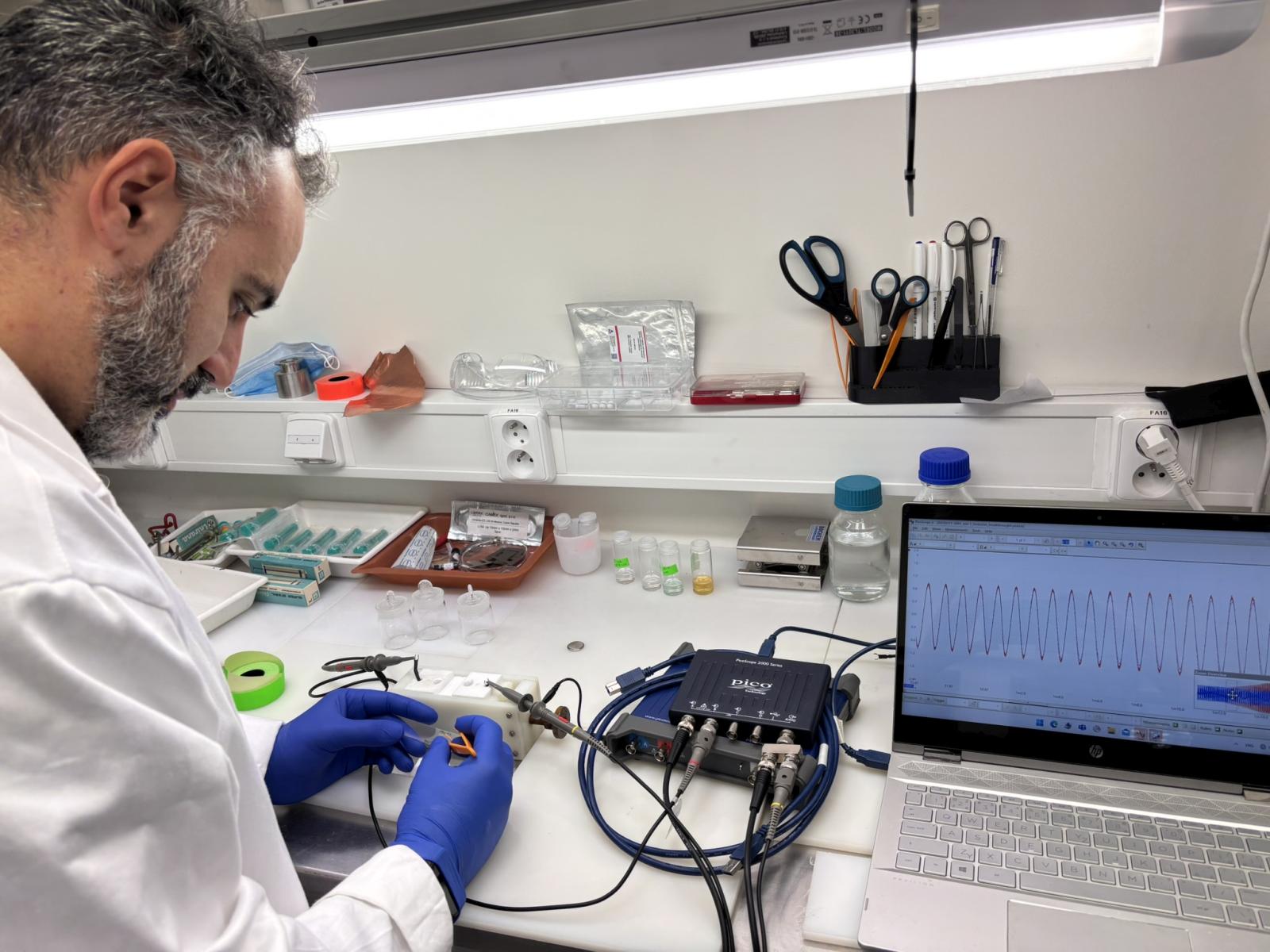
The study confirmed that the developed membranes enable photo-assisted degradation of BPA under UV-A light while simultaneously showing a strong response to humidity changes (variation in electrical resistance), which is important for sensing applications. The performance of individual samples mainly depended on pore size, surface condition, and the parameters of the PLD nanolayers (e.g., thickness and coverage), allowing fine-tuning between adsorption, photo-assisted, and sensor functionalities.
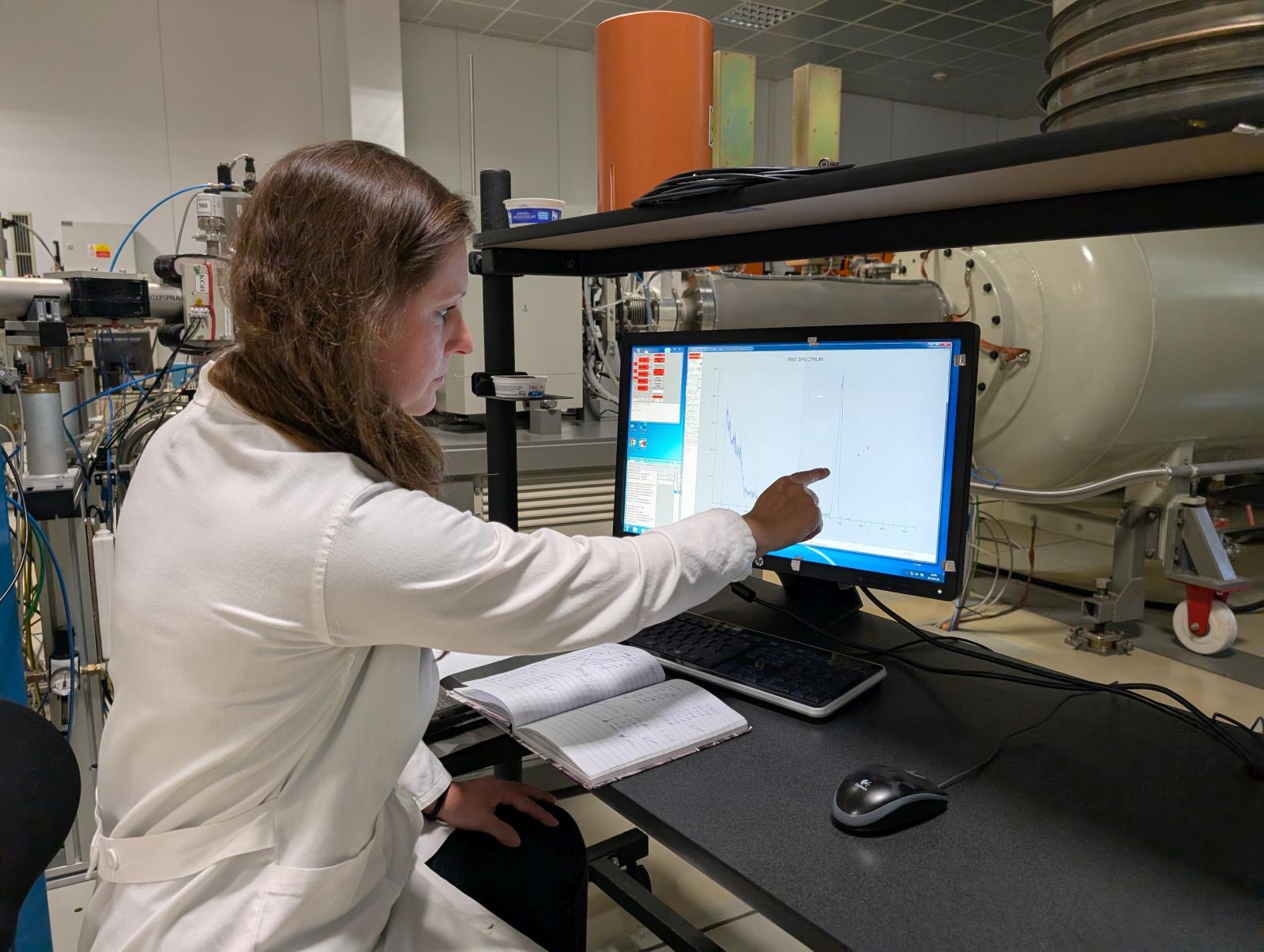
The research thus confirmed the dual functionality of the MoS2/PET composite membranes, both photocatalytic and sensoric, offering new opportunities for environmental monitoring and protection. The study also demonstrates the expertise and technological competence of the Nuclear Physics Institute of the Czech Academy of Sciences, which, in collaboration with the Institute of Inorganic Chemistry CAS, University of Chemistry and Technology, Prague, and international partners, mastered the complex process from ion irradiation through chemical etching to the deposition of nanolayers using PLD method, as well as the testing of the functional properties. This integrated approach represents a prime example of multiscale materials engineering.
Read also
- Seminar Marking the 100th Anniversary of the Formulation of the Schrödinger Equation
- SPACEDOS dosimeter passed another important test ahead of the ISS mission
- An international experimental campaign focused on superheavy element research took place at the NPI
- Cadets of the Zero-G mission visited the NPI Department of Radiation Dosimetry
- Ondřej Srba appointed new Head of the Department of Radiation Dosimetry at the NPI
- Jane Hvolbaek Nielsen appointed new Director General of ESS
- Jane Hvolbaek Nielsen appointed new Director General of the European Spallation Source (ESS)
- KATRIN experiment approaches the final phase of neutrino mass measurements
- Martin Kákona commented on the Artemis II mission
- Jan Vaněk played a key role in a study published in NATURE
